Monday, July 15, 2013

ADNEXAL CAUSES OF DYSPAREUNIA

Mary went to see her Gynaecologist all upset to find that she had a cyst on the left ovary.
Recently there has been a fair bit of talk about Ovarian Cancer, however all the cysts are not cancer, there are lots of different types of cysts on the ovaries which are harmless, particularly in young women.
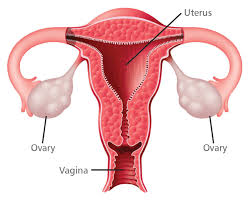
What are ovaries?, they are the main sex organs in the female who along with the uterus perform the human reproductive function. Ovaries along with their tubes are referred as Adnexa.
The above diagram shows the maturation of the egg.

These amazing organs lay dormant until puberty then they become active for 30 to 40 years of a women's reproductive life and then they stop again and this is then called Menopause.
Scientists are still trying to study what suddenly brings on puberty.
I think that they are close to solving this puzzle.
Scattered in the ovary are millions of immature eggs. these are called primordial follicles.
In the foetal ovary there are millions of these , at puberty there are about four hundred thousand, they gradually mature into eggs, the rest dry up and at menopause we run out of them.
As the primordial follicle matures it makes a cyst that is a cavity full of fluid, this has hormones and this is called follicle cyst. This is one of the common cause of pelvic pain, especially in the midcycle when it is growing and releases the egg. Sometimes it overgrows and causes a follicular cyst, which causes pain. After the follicle ruptures it forms another cyst, which is called corpus luteum cyst and when picked up by ultrasound , both these cysts cause anxiety in women, however they are not cancerous. We call them physiological cysts as they are the result of cyclical ovarian function.

They are causing symptoms , such as acute pain, haemorrhage, torsion(twisted), grow bigger than five centimetres and do not resolve by themselves, then they require surgical removal which can be done by key hole surgery. It is often best not to disturb the corpus luteum cyst as it can bleed during surgery and subsequently causes scar tissue.
There are many different types of ovarian cysts and we will discuss these in another post, and most of these are often pain free, unless touched during intercourse.

The other Adnexal Pathology that causes Acute Dyspareunia is an ectopic pregnancy , which means pregnancy in the tube. The diagnosis is made by a pregnancy test and an ultrasound. Again urgent treatment is recommended.
The other ovarian conditions related to acute pain not necessarily related to dyspareunia are torsion of the ovary, rupture of an ovarian cyst. All these conditions require urgent medical attention.       
 

Wednesday, July 3, 2013

PELVIC CONGESTION SYNDROME

In our previous posts we enumerated some causes of Deep Dyspareunia and we are endeavouring to cover all these causes, in a little bit more detail but not in the order that we posted previously.

In this post we will focus on Pelvic Congestion Syndrome (PCS). Nearly 30 percent of women suffer from this condition in their lifetime. The top age group is between 20 to 45 years of age. It is caused by , varicose veins in the pelvis around the uterus and ovaries, similar to varicose veins in the legs.
It is not understood  if there is a genetic factor or anatomical factor in the formation of the veins.
The women suffer from chronic lower abdominal discomfort, backache and pain on intercourse, it gets worse at the end of the day and after sex.
The other symptoms they suffer is heavy painful periods, vaginal discharge, bladder discomfort and mood swings.
It usually happens after child birth, with the hormone changes and weight gain during pregnancy, which puts pressure on the ovarian veins and the blood flow is impeded. High levels of oestrogen during pregnancy dilates the veins, further contributing to the problem. With each pregnancy over time the uterus enlarges, the lining of the uterus becomes thicker and often the uterus falls backwards(this is called Retroversion), this further adds to the problem of dyspareunia, the periods become heavier and painful.
The diagnosis of PCS is difficult because there are nearly twenty other conditions which cause the complex chronic backache, heavy and painful periods and dyspareunia.
About twenty years ago we offered them medical treatment, often followed by hysterectomy.This did not really help the women and their symptoms continued. The removal of the ovaries was more helpful, but then the problem was of sudden surgical menopause and hormone replacement was required. And we replaced one problem with another.
Luckily we have learnt a lot more about PCS and are able to help the vast majority of women.
Most of the clinicians being aware of the problem, try to tackle it in the modern way.
The history and clinical examination helps us to exclude many other conditions, such as large fibroids and ovarian cysts.
The diagnosis is of exclusion of other causes. An ultrasound examination is useful to exclude other pathology, but often it does not highlight the veins because it is carried out in a supine position. The new colour ultrasound is useful if available to show us the uterine congestion.
CT and MRI is useful however CT is more invasive as we have to use injection of dyes to highlight the problem and the patient is exposed to radiation.
Venogram  is most helpful in making a diagnosis, as it is not too drastic. Only, it has to be done by a special radiologist at a specialist centre.
They can inject the veins with sclerosing agents to block them and they can put little clips inside the veins so that the backward blood flow is stopped. This simple treatment of embolization gives women satisfactory results for several years. The very latest diagnostic and therapeutic technology to manage this condition, treating it effectively with a minimally invasive outpatient procedure.


 These pictures show the vascular uterus on colour ultrasound, a venogram of pelvic organs with venous congestion, and post treatment ,left ovarian vein. 
For those women who cannot avail themselves of the most current and remarkable treatment for PCS
the old medical treatment  still helps.
This consists of pain relief by non steroidal antinflammatory medications, oral contraceptive pills, and drugs to suppress the ovaries. Some people believe in Acupuncture, Homeopathic and Osteopathy. Surely all this can be tried with adequate rest and counselling.

In the next post we will talk about Adnexal Pathology (Tubes and Ovaries)

Monday, June 24, 2013

DEEP DYSPAREUNIA

In our previous posts we have been talking about Dyspareunia as apposed to the superficial pain of the vulva, Deep Dyspareunia is caused by deep penetration of the penis into the pelvis.

Deep Dyspareunia is usually due to pelvic pathology and the following conditions are commonly encountered.
1   Endometriosis
2   Adenomyosis
3   Acute and Chronic Pelvic Infections
4   Pelvic Congestion Syndrome
5   Adnexal Pathology
6   Retroverted Uterus
7   Residual Ovary Syndrome
8   Interstitial Cystitis
9   Dry Atrophic Tissues
10 Psychosocial Problems

Endometriosis is a condition, the cause of which we do not understand. In spite of lots of research.
In this condition the lining of the uterus can survive outside the uterus, and with each menstrual cycle has some bleed, as a result of that , some scar tissue forms. Often the blood collects and forms cysts of varying sizes. This can happen at any age group. The main symptom is painful periods, abdominal discomfort, pain on defecation and deep dyspareunia. We talked about clinical history in examination in previous posts but if you are looking for the cause of deep dyspareunia it is important to have an ultrasound and an MRI, so that diagnosis of some of the other conditions can be made.

Endometriosis also causes infertility, the definitive diagnosis is established by a surgical procedure called Laparoscopy, which in simple words mean Key Hole surgery of peeping in the belly.When Endometrios is minor it appears as dark spots which can be lasered or diathermy and this gives relief to the patient. This should be followed by oral contraception, so that the periods are small or none. With this treatment, the chances of endometriosis recurring are minimised. This often helps the women to get pregnant if they were having difficulty.

                                                 Diathermy of Endometriotic Implants
                                                 during Laparoscopy.

Endometriosis grows under the influence of hormone oestrogen, therefore it grows during reproductive years. It eases off during pregnancy and after menopause. It is a painful condition, the main treatment needs to suppress oestrogens which can be done by many drugs, the simplest being Progesterone and continuous oral contraceptive pill.
The other part of the treatment is pain relief, and this can be done by non steroidal antinflammatory drugs.
If the endometriosis is advanced and has made large cysts , they have to be surgically removed, either by key hole surgery or open surgery. The largest endometriosis I have removed were about the size of two cantaloupes , one on each ovary.
For what ever reason this patient had no pain. The diagnosis was made by Ultrasound.
The youngest patient  of endometriosis I have treated with laparoscopic diathermy was thirteen years of age. I was a bit reluctant to do this , but her mother assured me that her pain was very severe and I had to do something.

Endometriosis in itself is a very large topic and needs an individual post which I will do at a later date. But for now, you can remember that this is one of the main causes of Deep Dyspareunia.

Adenomyosis is similar to Endometriosis and here the endometrial implants are within the muscle of the uterus. Month after month there is small bleeding within the muscles of the uterus, as a result the uterus enlarges in size and the patient has heavy and painful periods. She feels as if there is a lump in her belly. When the uterus becomes enlarged it falls backwards, what is called retroverted uterus. This cause chronic pelvic pain and deep dyspareunia. This can also cause pelvic congestion adding to the symptoms. Adenomyosis  until recent times was ignored as there were no definitive diagnostic criteria. Recently with the help of colour ultrasound and MRI it has become easy.

There is no definite cure for adenomyosis but we suppress the oestrogens with the pill, intrauterine device called Mirena. The cure is hysterectomy in older women, who do not desire any children and a definitive diagnosis is made when the uterus is in your hand.
    The remaining causes of Deep Dyspareunia will be covered in forthcoming posts.     


Monday, June 10, 2013

VULVODYNIA

In my previous blog we talked about Rena's story when her honeymoon became a disaster.
We talked about the reasons and their management.
Today we have a similar story about Ashley, due to another cause of Vulval pain.
This is called Vulvodynia. She has been having this painful condition for almost a year, her social and marital life is very strained and stressed and she is already seeing two clinicians without any satisfactory resolution.
Vulvodynia was described for the first time in 1880. It was already mentioned in my previous post as Super Sensitivity of the Vulva. However it was ignored almost for a hundred years, then in 1975 International Society of Vulvo Vaginal Diseases, called it Burning Vulval Syndrome.

It is a very poorly recognised female pain disorder although one in four women suffer it sometime during their lifespan from adolescence to post menopause.

The current definition of Vulvodynia by ISSVD is:
"Chronic Vulval discomfort, most often described as burning pain, occurring in the Absence of relevant visible findings or a specific, clinically identifiable, neurological disorder"

We do not yet understand the full story of Vulvodynia.

Misdiagnosis is the commonest cause of suffering, when only one point four percent  seeking medical advise are correctly diagnosed. It affects the quality of life , the women get confused, there is delay in treatment and they self medicate.
Vulvodynia can be generalised , that means that it is all over the vulva, or it can be localised, the most common sites are the vestibule and the clitoral area.
And then it is called Vulvo Vestibulitis or Clitoral Vestibulitis.
When a patient comes to you with vulval pain , you take a detailed history, of how long she has had the pain,and the events that started the pain.
Sexual activity can it be continued and Psycho Sexual relationships with her partner. It is also worthwhile to know if she has had any operation in that area, and has she had a child.
The hygiene practices are also important to know.
On examination ,  we should inspect the vulva, look for any ulcers, scarring and muscle spasms, called vaginismus.
We take swabs, skin scrapings, and cervical cytology to exclude any other diseases.
One of the very simple tests is to give a cotton wool swab to the patient and ask them to show where the pain is most.
The three criteria for the diagnosis of vulvodynia , is very mild pain on touch, no positive findings and mild redness of the vulva. There are very little minor glands in the vestibule that get inflamed and cause pain.
The vulvodynia can be classified into three categories : One is the intercourse despite being painful that can be carried out with some degree of discomfort. Second Category has to be discontinued due to pain and the Third is sex cannot happen.

Vulvodynia was primarily thought to be psycho sexual but we think that there is neural problems, these most often resolve in time.
Treat any existing problems that you may have come across during your investigation.
The explanation of the condition given to the patient and the reassurance that about seventy five percent can be treated helps them.
The general advice should emphasis is that they should not self medicate and get a clear cut diagnosis.
They can wash themselves with a freshly prepared saline solution consisting of two teaspoons of salt in a litre of water. They can use cold packs to relieve the pain, do not use commercial perfumes or antiseptics and wear light clothing. Try and improve your relationships and relieve the stress.
Follow the treatment for vaginismus , you may need help of a physiotherapist who is happy to give you bio feed back treatment. Electromagnetic treatment has been tried.
Neurological Antidepressants such as Amitriptyline with a small starting dose of 10mgs. It is thought to act as nerve membrane stabiliser.
Local lubricants (water based) are useful, oestrogen cream is useful in peri menopausal women.
Five percent Xylocaine cream can be applied at the time of intercourse.
Surgically vestibulectomy has been tried with significant improvement.
Now because we think that there is a neurological involvement we are doing more studies on the refining the diagnostic criteria and treatment of this very elusive condition.

The various other Vulvo Vaginal problems will be discussed in future posts.   

Thursday, May 30, 2013

DYSPAREUNIA OR WHEN SEX HURTS

DYSPAREUNIA OR WHEN SEX HURTS

Pretty girl Rena came to see me in my office upon return from her honeymoon, she was in tears, this honeymoon was a total disaster, as they could not enjoy or have any sexual entertainment or pleasure.
Dyspareunia means painful sex, and the word is derived from Greek, which means (Badly Mated).
When you cannot have sex at all is called Apreunia.
Vulval pain is in fact quite a common condition, more often occurring in women, almost one in four  women suffer with Dyspareunia during there life span.

Historically it was described in 1880 as hypersensivity or super sensitivity of the vulva. It was in 1975 that the Vulvovaginal Disease Society gave it a name , burning vulva syndrome.
We have come a long way in understanding the problem , however we do not totally understand what causes it. In the past the condition was considered to be psychological, however luckily for the modern women the current diagnostic and therapeutic approach is integrated with some psychology.
Dyspareunia is a complex problem and frequently has a multifactorial aetiology. A new way has been recently suggested to define dyspareunia by dissecting it into primary, secondary, and tertiary sources of pain. It is also defined into superficial or deep depending on the origin of the pain and these will be discussed in future blogs.

We are talking about pain in the female external genitalia which lies between our thighs, and it is called the Vulva.

The picture shows all the female genital organs. The vulva consists of Labia Majora on both sides and in side this is Labia Minora on both sides. On the top is the Urethra and just above is the Clitoris not seen in the diagram. The little opening leads to the Vagina and the area around is called the vestibule. It is in this area that the pain is called Dyspareunia.
As a result of the pain the muscles of the area go into a spasm, and this is then called vaginismus.
Vaginismus can often happen before the sex is initiated, due to fear or psychological reasons.
Dyspareunia can be superficial, due to the visible structures or deep within the vaginal area.

In this post we will concentrate on some of the superficial causes of pain. We will not talk about the skin conditions, such as infections, dermatitis, herpes, human papilloma virus, congenital abnormalities such as the vaginal septum's, tough hymen, absent hymen or even absent vagina. Hymen is a membrane with a small opening in the centre , through, which the menstrual blood flows. At the time of commencement of sexual activity, the penis goes through the hymen, enlarging the opening.
Sometimes if this is not possible a medical procedure is necessary to enlarge it.

This type of difficulty along with painful infections or fear, disparity between the size of the mans penis and vagina, the vulva goes into a muscular spasm, this is very painful and some times extends into the women's legs.
Women coming from very conservative families , lack of education and abuse as a child, along with
local operations on the vulva and traumatic child birth, also get vaginismus.
So as medical practitioners after taking a detailed history and clinical examination should then advise the treatment accordingly.
The simplest thing to start with is to give basic education on sexual intercourse, reassurance, and some antidepressants.
Physiotherapy of the pelvic floor is useful.
It the vaginismus is not to severe you can help, by teaching the patient how to dilate the vagina. The vagina should be well lubricated, watery lubricants should be used. In my experience I have found Olive Oil to be a very good lubricant. The women should avoid using off the counter preparations, such as strong soaps, talcum powder or perfumes. The best thing to wash is with plain clean water.
The dilators are available as a set of gradually increasing size and the women can lubricate it slowly in the shower.
In very severe cases of vaginismus where the sex is totally impossible the treatment has to be taken.

One of the best treatments was described by Master and Johnson in 1970, still makes great sense to me. There advise that the couple should have a peaceful time to have relationship, initially they should touch each on non sexual organs, taking it in turns as to who starts first. There is total ban on sexual activity until the women is totally relaxed. There should be a fair bit of foreplay until she is well lubricated. The sexual activity should start with regular gentle stretching.
This condition is almost always reversible.

The next important condition causing superficial Dyspareunia is currently named Vulvodynia and we will talk about this in the next blog.
        

Monday, April 8, 2013

OSTEOPOROSIS

Osteoporosis
Osteoporosis is a very common condition in the present world , perhaps because we are living longer. Osteoporosis in simple language means fragile bones. It is more common in females. One in Five females suffer from this after the age of fifty, the recent study done in Australia showed that there were 1.3 million osteoporotic women in Australia compared with 50 million women in USA in 2010. 80 thousand women each year in Australia, suffer from a fracture from minor trauma, usually in the arm , hip and spine.
Billions of dollars are spent on health budgets to look after these women and men.
And the misery they suffer from the complications are immeasurable.
Osteoporosis is a preventable disease and we can save so much pain and suffering and cost if we act early.
This prevention really should be started in childhood, its like the foundation of a house, the better , the longer the house will stand. Like the repair of the house , the body also needs constant care to prevent osteoporosis.
The four important factors that are adequate nutrition, calcium, vitaminD and physical activity. 
In very young children up to the age of 4 you need 500mgs of calcium per day, then in adolescents about 700mgs and teenagers about 1000mgs. In older women the need increases again to 1300mgs per day.
Five to ten minutes of sport in the sun each day is enough to keep their vitamin d levels up to around 50units.
So as you can see it is very simple to maintain your bone health.
The best bone health is around late twenty's and it is called peak bone mass.
So if you have your best bone density at that age, your risk of osteoporosis is 30% less in old age.
There are some risk factors which increase the risk of osteoporosis , the most important being genetics, a frail figure, smoking, long term use of steroids, for example in Asthma, early menopause, poor gonadal activity(poor development).
The diagnosis is best made by bone density scan, called "dexa scan".
More tests are performed in complicated cases to study the calcium metabolism, and hormones involved in bone formation.
The treatment is simple, keep your calcium, Vitamin D and exercise up. 
The drugs required fall in to two categories' one is to stop the bone destruction, and the other is to make the bones remodel. The bones get repaired all the time by the process of absorption and remodelling .
Hormone replacement in women is the best treatment for prevention and management of osteoporosis, except where this cannot be given. 
It is very useful to take HRT in early menopause preferably before the age of sixty.
DO NOT BE AFRAID of HRT or MHT, do not suffer and enjoy life.
There are many other drugs available, for the management of osteoporosis, and they fall under the group of drugs called anti absorptive, they are called Bisphonates.
Nothing is worse than lying in a hospital with a broken hip, hanging in a sling, counting days, don't let it happen, do not be anti HRT, you cannot treat osteoporosis by calcium , vitamin d only.
To build a house you need a builder which is the HRT and you need concrete which is Calcium and Vitamin D.

Monday, April 1, 2013

"HOT FLASHES" Timing is everything in managing them. So how old are you today?. and you couldn't sleep all night yesterday because of them. So now is the right time to start HRT (Hormone Replacement Therapy), take the real diamond (the proper commercial drug) not naturopathic or homeopathic. They have not been scientifically tested and they do not really help. While all HRT carries some risks, but they are very useful in giving you a new lease of life, no hot flashes, good sleep, and happy sexual interludes. It prevents the long term side affects of menopause such as Osteoporosis , Bladder control, and newly diagnosed Diabetes. If you are between 45 and 60, now is the best time to start to enjoy life. See a doctor who is familiar with all forms of HRT and have it tailored to your needs. Use of custom-compounded bio identical therapy is not recommended. Special care has to be taken if there is risk of venous thromboembolism, stroke, ischemic, heart disease. The risk of breast cancer in women over fifty years is a complex issue and needs very special attention. In women with premature or surgical menopause HRT, should be given up to the age of normal menopause. There is a lot more to menopause than this brief summary. DO NOT BE AFRAID of HRT or MHT, do not suffer and enjoy life.