Wednesday, October 2, 2013

REMAINING VULVAL DISORDERS

For the last few posts we have been focusing on various skin and mucous membrane problems that cause vulval pain ,discharge , discomfort and dyspareunia, most of these have already been elaborated on and I will discuss the remaining few today. It is very difficult to discuss all of them as many of them such as psoriasis, tinea, and lichen planus effect almost all parts of the body covered by skin and mucous membrane and they often come under the domain of a dermatologist.
One of the common group of inflammatory conditions of the vulva  are called; 1-Lichen Planus, 2-Lichen Simplex Chronicus, 3- Lichen Sclerosis.

Lichen Planus is an erosive condition of the vulva which can affect both the vagina and the vulva, besides the genital area it can affect the scalp, hair and legs.
It has a reticulated purplish appearance which is very painful and uncomfortable. The diagnosis is confirmed by a biopsy and has a malignant potential, there is no definitive treatment, the patient needs reassurance, local emollients and steroids. Some people have tried testosterones. Recently cyclosporine are being tried.

 The above picture is Lichen Simplex Chronicus.

This also causes itching and leads to chronic rubbing and scratching , this usually affects the labia Majora, Labia Minora, and Labia Crural Folds. The vagina is not involved, this can result from chronic infection , anxiety conditions such as Psoriasis, Eczema. The skin becomes thick and leathery as you can see in the above picture and brownish. So the treatment is again reassurance, tranquillisers, antihistamines, anti pruritic agents and corticosteroids. The cause of chronic anxiety or infection causing the itch also needs to be treated.

Lichen Sclerosis is a chronic inflammatory disorder of the skin affecting both genital and extra genital skin such as the armpit, neck and shoulder and sub memory fold below the breast.
It can occur at any age including children, usually if it occurs in young girls it goes away as they mature. Most often it occurs in post menopausal women. Again like other vulval skin problems it causes itching and pain. The skin gets thickened and causes adhesions. The local tissues are destroyed. We are not sure what causes this, but like Lichen Planus it is thought to be auto immune.
Autoimmunity is a process in which the body fails to recognize itself and therefore attacks its own cell and tissues.
The treatment consists of avoiding commercial body washes and antiseptic solutions. Washing with a freshly made saline solution of two teaspoons full of salt with one litre of water is very soothing.
You need to do this twice daily for several weeks, then repeat the wash as required.
Daily strong tropical steroids are required on your doctors advice.

Lichen Planus and Lichen Sclerosis both have a five percent cancer potential , therefore it is very important to have six monthly regular appointments with your gynaecologist.


The vulval conditions described above need patient education, psychological  counselling, avoidance of commercial gimmicks, symptomatic treatment, saline washes, emollient's, corticosteroids, treatment for any inter current infections, ie: Thrush, (Candiasis) and above all regular check ups, and never treat yourself without correct diagnosis by a professional.

Bartholin's Cyst and Abscess

Bartholin gland is a small gland that lies in the entrance to the vagina and basically a small amount of fluid keeps the vagina moist which is useful during sexual intercourse. It has a small gland which carries the fluid to the vagina. If there is any infection the area, this little duct gets blocked and can cause a Bartolin's Cyst or Abcess. The important thing to know is that if it keeps happening it needs attention to exclude STI and often it requires drainage.


The above picture show the location of a swollen Bartholin Cyst and it's drainage.

Genital Herpes

Genital Herpes is caused by type one and type two herpes virus, initially not much attention was paid to this, but nowadays it is the most commonly transmitted disease. To prevent from yourself from getting herpes is to always use condoms, use suppressive viral therapy to protect your partner and avoid skin trauma by using silicone based lubricants.
The diagnosis is made by a swab test from the lesion, the blood tests are not so accurate. The initial attack of herpes is very painful. The treatment is anti viral drugs called Valtrex, Famvir and Zovirax.
The frequent occurrence can be treated by taking one tablet daily, this also protects transmission to the partner. It is very important to avoid herpes in the last few months of pregnancy as it can be dangerous to the newborn baby, and if the mother has an active rash on the vulva, the baby should be delivered by caesarean section.


Human Papilloma Virus is another virus which affects the female genital organs, particularly the cervix and the vagina and the vulva. The visible disease that is causes is the warts, otherwise it causes changes in the cervix which in the long term can lead to cervical cancer. To avoid cervical cancer that the smear test is implemented around the western world.
Please ensure that you have regular smear tests.

Another cause of vaginal discharge in post menopausal women is due to lack of oestrogens and it can be easily relieved by local oestrogen. However any women who suffers from irregular bleeding in the older age group must be investigated to exclude malignancy.

Often the vaginal discharge is due a foreign body and often this is a forgotten tampon.
The four tests which are useful for all these diagnoses  is a cervical smear, swabs, biopsy and ultrasound.

You may have to read or research more to increase your knowledge on vulval vaginal infections.
And this is all from me on this topic.

In future posts we will continue our journey on Womens Health problems.


Monday, September 23, 2013

SNIPPETS OF INFORMATION ON VAGINAL DISCHARGE

1-Vaginal discharge is a variable subject what is normal for some women may be abnormal for others.

2-If you have a vaginal discharge do not start treatment without a diagnosis. What you may consider as just Thrush may even be malignancy. I have recently two such cases in older women. Post menopausal women generally do not get thrush until they are diabetic or using HRT.

3-When you have recurring Candidiasis it can be due to any oestrogens you may be taking, high oestrogen pill, poor diabetic control and due to another variety of Candida called Candida Glabrata.
For this you require stronger treatment called Intraconazole 200 mgs twice a day three times a week , then twice a week for four weeks.
There are other forms of treatment which you GP will advise you on.

4-When should you treat the male partner in recurring Candidiasis? The candida store itself in the seminal vessels and a culture of the semen should be done, and if positive the partner should be treated. The should also be treated if they have an infection of the penis and be given a local cream.

5-In cases of recurring candidiasis saline was once or twice a day is very comforting, it also helps with other inflammatory conditions , such as vestubulitis.

6-The other treatment could be , change the pill, control diabetes and general hygiene, not share garments with each other.

7-Boric acid gelatine pessaries can be used once or twice. If used frequently they can be toxic.

8-Vagina can be painted with Aqueous Gentian Violet 0.5 percent to 1.0 percent, once a week.

9-Last but not the least Depoprovera injections are often very useful to control Candidiasis.
One has to be careful if it is used long it can cause 1.0 percent loss of bone density thus causing osteoporosis.

10-Avoid local antiseptics, perfumes and commercial moisturisers. Anti histamines and Amytriptaline at bedtime is very useful. Chronic treatment of recurring Candidiasis can cause eczematic rash and local dermatitis.

So the take home message is , take the correct treatment after the correct diagnosis.

The next post will be on the remaining Vaginal Infections and Inflammations. 

Monday, September 16, 2013

SUPERFICIAL VAGINAL INFECTIONS

While we are talking about Dyspareunia, let us complete the subject by talking about Superficial Vaginal Infections(SVI) and inflammatory conditions called Vulvar Dermatoses, they also cause Dyspareunia, Vulvo Vaginal Pruritus and Vaginal Discharge.

All women have vaginal discharge during their reproductive life, in varying amounts during their menstrual cycle. I wonder if any of you have ever thought what a great house keeping function this discharge does by keeping the vagina clean, by washing away the dead cells and infections.
This normal vaginal discharge comes from the glands located in cervix and the vagina.
There is increased discharge at appropriate times such as ovulation and sexual arousal.
It is very important to keep the personal vaginal hygiene up to date.

The question is where do these infections come from, some of the organisms are locally present and under conditions favourable to them , they start playing around and cause disease, the commonest of these is a fungus called Candida.
On other occasions the infections come after child birth, pelvic operations, sexual intercourse, unscientific use of antiseptics, scented soaps, bubble baths and washes and the list can go on.
The main discharge problems along with pain and pruritus are as follows;
1-Candidiasis,2-Bacterial Vaginosis,3-Trichomonas,4- Nabothian Follicles,5-Cytolitic Vaginosis,6-Streptococcal Vaginosis,7-Erosive Vaginitis,8-Atrophic Vaginitis,9-Chlamydia,10-Gonococcus,11-Foreign Body, 12-Malignancy.

We have already discussed Chlamydia and Gonococcus in our previous post on PID, its difficult to discuss all the above conditions, but we will discuss the commonest of these being Candidiasis, Bacterial Vaginosis, and Trichomonas.

VULVO VAGINAL CANDIDIASIS(VVC)
It is estimated that 50 to 70 percent of women of all ages during their reproductive life suffer from at least one episode of VVC.
They generally do not suffer prepuberty and postmenopausal, because Candida loves oestrogen and oestrogen milieu and during this period of life is absent or low.
The infection is caused by a variety of Candida Albicans, the other variety of Candida often found is called Candida Glabrata and this requires special and stronger treatment.

Vulva and Vagina are both involved but often not together. In diabetic women VVC is often very severe the area looks very inflamed and swollen and the infection spreads to the groin and perianal area.

The symptoms of VVC can be mild or severe and they include severe itching, and maybe pain on passing urine. The risk factors are pregnancy when the oestrogen level is high, use of antibiotics, diabetes, and HRT.

The diagnosis is easy considering the history, and examination which shows redness and white curdy discharge in the area.
There is a simple office microscopic test using saline and sodium hydroxide which shows fine filaments which is called pseudohyphae, this test also shows Trichomonas vaginalis -this organism will be readily recognisable by its characteristic movement.
Bacterial vaginosis -have a special cell, called a clue-cells.
We can also see the hormone status of the individual by looking at the vaginal cells. So this test gives a lot of information. Still it is best to send a vaginal swab, cervical cytology and STD test in high risk patients.
The treatment of VVC is to remove the risk factors, control diabetes and for the very first episode, local vaginal nystatin cream for one week, this can be used during pregnancy as well. It is important to clear candidiasis in pregnant women because it can be passed on to the baby at birth as an oral infection, subsequently the baby can pass it on to the mother during breast feeding.
If candidiasis persists we have to look for the reasons for persistence, I often do a glucose tolerance test to exclude diabetes, if they are on high dosage oestrogen pill, change the pill or use a different type of contraception. Depoprovera and Mirena are good alternatives. Mirena is a progesterone releasing intrauterine device. DPMA is an injectable progestron which is given by a IM injection of 150mg every three months.
Both these are good long term contraceptives and help in getting rid of chronic candidiasis.
Long term recurrence requires long term treatment, which is given over a period of six months.
1- Vaginal nystatin pessaries every night or alternate night for six months.
2-Oral flucanazole of 100mg twice weekly for six months.
3-Oral ketoconazole 200mg a day for six months. This is hepatoxic, so the liver needs to be tested every two to three months.
The vagina can be painted with gentian violet weekly for several weeks.

Once again the subject that we have just discussed needs more time and information and this will be followed up in our next post.
 

Monday, August 12, 2013

PELVIC INFLAMMATORY DISEASE

Michelle  aged 33 came to see me complaining of infertility, meaning that she was unable to conceive within the last fourteen months, she was advised that the reason for this is damage to her tubes.
She was not aware of any illnesses that may have caused this, my immediate reaction was that she probably had very mild pelvic inflammatory disease at college, which often can be silent and can cause tubal damage.
Technically (PID) is a term used to express infection of the uterus , tubes and ovaries, which often results in long term damage of the tubes, adhesions and infertility. This causes chronic Dyspareunia, pelvic pain and backache.
I feel that the infections of the cervix, vagina and vulva should also be included as PID.

The main reason for PID in younger people is by sexually transmitted infections, the typical person having these problems is a young women having periods and sexually active.
The other causes of PID are infections during an abortion or miscarriage, intrauterine devices and blood born diseases, such as Tuberculosis which is relatively rare in the western world.

The infecting organisms, Chlamydia Trachomatis, Neisseria Gonorrhoea are sexually transmitted bacteria which can cause asymptomatic infection or very serious disease.
Other sexually transmitted disease are Herpes Virus, which causes changes in the cervix called cervical dysplasia and this if progressed can lead to cervical cancer, this does not cause an infection of the uterus, tubes or the ovaries or in other words the internal organs. Trichomonas  Vaginalis which is not a bacteria but is a protozoa. (A type of infecting organism) which is also sexually transmitted. It mainly affects the vagina causing smelly discharge and itching.

Other organisms that live happily in that region are likely to cause infection such as streptococcus Ecoli.

The diagnosis in Michelle's case was made by laparoscopy when on testing the tubes they were found to be blocked and convoluted. This can also be tested by a radiological test , but laparoscopy gives better information as regards adhesions in the pelvis. So obviously she must have had a silent episode of PID in her younger years. By the frequent nature of silent STD's amongst young women it was assumed that this was also an STD. A cervical swab was performed for Chlamydia and Gonorrhoea but as expected it was negative for both. Besides the swabs, laparoscopy and ultrasound often prior to laparoscopy and blood tests are also performed. The blood test which can give us an idea of an active infection is called CRP.

When you have mild symptoms of pelvic pain, altered menstrual function, pain on intercourse, please do not ignore them and do not run the risk of silent PID, as we have learnt in Michelle's case the long term consequences can be permanent.

Thanks to modern assisted reproductive technology, Michelle was helped to have a healthy baby.

When a women presents with pelvic pain, altered bleeding, there are many other conditions that have to be kept in mind. One of the most important is an Ectopic Pregnancy. The current pregnancy tests are extremely accurate, and if it is a positive result it's highly possible that the women has an Ectopic Pregnancy , this could be the result of a past or present PID.
Other diagnoses that should be remembered are appendicitis, septic abortion, haemorrhagic ruptured ovarian cyst, twisted ovary, degenerating fibroid and enteritis.

Clinical history, pelvic examination, blood test, pregnancy test, ultrasound, swab test, and finally laparoscopy will give us the diagnosis.
The treatment depends on the cause and in PID multiple antibiotic therapy is recommended as often we are unable to grow the infecting organism in PID.
It is very important to clear the PID as the long term consequences are serious and dangerous, as already mentioned it can cause infertility, chronic PID, chronic adhesions even affecting the liver, Ectopic Pregnancy, and even death in some situations.

PID is a serious disease and every attempt should be made to treat it early on very minor symptoms, such as vaginal discharge, pain and bleeding.
The most important thing is to have regular medical check ups if you are sexually active, and should you have a new sexual partner have him tested for STD's.
The second thing is do not take over the counter medicines for vaginal discharge or itch, without a proper diagnosis. All that itches is not thrush.
I have seen a women in her seventies who was treating herself for thrush and in fact it was vulval carcinoma.
Post menopausal women do not get thrush unless they are diabetic or taking excessive HRT.
Although women who are post menopausal, are not so prone to PID, but occasionally they get a collection of pus inside the uterus called pyometra, this needs treatment.

The moral of the story is do not consider vaginal discharge insignificant, have it seen to, and do not treat yourself.
We will discuss the superficial pelvic infections on my next post.                    


Monday, July 22, 2013

RESIDUAL OVARY OR OVARIAN REMENANT SYNDROME

Stephanie aged 48, came to see me with severe Dyspareunia.
She had a Hysterectomy with the ovaries conserved six years ago, and for the last two years this pain was gradually increasing, she had seen two other clinicians who had advised her to use local oestrogen cream and maybe change coital position. This treatment did not help her.
When I saw her on examination her vagina was not dry and she was tender on both sides where her ovaries were supposed to be located, and on moving the vaginal apex she felt pain.
My diagnosis was immediately clear that it was what we call Residual Ovary Syndrome(ROS).

A pelvic ultrasound was performed , this did not show any disease of the ovaries. I offered Stephanie Bilateral Salpingo-oophorectomy.(Removal of both tubes and ovaries), followed by hormone replacement.
Stephanie agreed to this and was a million dollars after treatment.

ROS is a condition which is not often thought of and many times women are older and are reluctant to discuss the condition of dyspareunia. Even if they do, they are more often offered local treatment.

ROS has been found to happen in two to three percent of cases after hysterectomy when the ovaries have been conserved. Usually three percent of these are found to be cancerous. Arguments continue if the ovaries should be removed with each hysterectomy. The general consensus of opinion is that if a woman is older than 45, removal should be considered depending on the woman's risk factors if she takes HRT for a long time. These are family history of breast cancer, stroke, deep venous thrombosis and heart disease.
If there is a family history of ovarian cancer it can become a bit tricky.
The final decision should be made by the woman depending on her individual choice.

ROS is characterised by pelvic pain, pelvic mass and dyspareunia. When a woman presents with one or more of these symptoms a clinical examination should be performed. An ultrasound examination often gives a diagnosis if there is an ovarian cyst or a mass. Further evaluation can give an idea if there is any suggestion of malignancy. Often a CT and a MRI is performed which can help the diagnosis in difficult cases. Sometimes these cysts arise from the peritoneum, which is a membrane that covers the inside of our belly.

The blood test for the patients general health and hormone studies to assess the ovarian function are useful. There is a test called CA125 which is a screening test for cancer, if it shows a low value, we can  assume that there is no cancer.
If we have excluded ovarian cancer with certainty by our tests, then the treatment can be one of the following;
1- Can be medical by hormones-Depo-Provera, GnRH Analogues, both these hormones suppress the ovaries and give temporary relief.
2- Aspiration of the cyst on the ovary, this fluid is sent for testing to exclude any cancer cells. This is also temporary, but it can be repeated more than once.
3- Radiation of the ovaries will stop them making physiological cysts.
4- The final and definitive treatment is by the removal of the ovaries or the remnants. This can be done either by key hole surgery or open surgery. This can be a difficult surgery because the adhesion's form around the ovaries, involving the bowel and ureter which can be damaged in the process.
In the first place these remnants are left behind because the initial operation was difficult due to pelvic adhesion's as a result of endometriosis and pelvic infections.
This has to be followed by supervised hormone replacement.
5 If there is any doubt about the ovarian mass or cyst being cancerous have it removed.

In summarising do not ignore post hysterectomy pelvic pain if you have one or both of your ovaries, have the necessary investigations and treatment. Do not be frightened of Hormone Replacement Treatment, it can make your life very comfortable if given under proper supervision.


Monday, July 15, 2013

ADNEXAL CAUSES OF DYSPAREUNIA

Mary went to see her Gynaecologist all upset to find that she had a cyst on the left ovary.
Recently there has been a fair bit of talk about Ovarian Cancer, however all the cysts are not cancer, there are lots of different types of cysts on the ovaries which are harmless, particularly in young women.
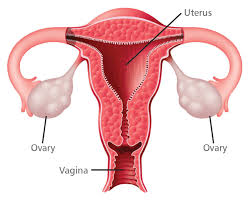
What are ovaries?, they are the main sex organs in the female who along with the uterus perform the human reproductive function. Ovaries along with their tubes are referred as Adnexa.
The above diagram shows the maturation of the egg.

These amazing organs lay dormant until puberty then they become active for 30 to 40 years of a women's reproductive life and then they stop again and this is then called Menopause.
Scientists are still trying to study what suddenly brings on puberty.
I think that they are close to solving this puzzle.
Scattered in the ovary are millions of immature eggs. these are called primordial follicles.
In the foetal ovary there are millions of these , at puberty there are about four hundred thousand, they gradually mature into eggs, the rest dry up and at menopause we run out of them.
As the primordial follicle matures it makes a cyst that is a cavity full of fluid, this has hormones and this is called follicle cyst. This is one of the common cause of pelvic pain, especially in the midcycle when it is growing and releases the egg. Sometimes it overgrows and causes a follicular cyst, which causes pain. After the follicle ruptures it forms another cyst, which is called corpus luteum cyst and when picked up by ultrasound , both these cysts cause anxiety in women, however they are not cancerous. We call them physiological cysts as they are the result of cyclical ovarian function.

They are causing symptoms , such as acute pain, haemorrhage, torsion(twisted), grow bigger than five centimetres and do not resolve by themselves, then they require surgical removal which can be done by key hole surgery. It is often best not to disturb the corpus luteum cyst as it can bleed during surgery and subsequently causes scar tissue.
There are many different types of ovarian cysts and we will discuss these in another post, and most of these are often pain free, unless touched during intercourse.

The other Adnexal Pathology that causes Acute Dyspareunia is an ectopic pregnancy , which means pregnancy in the tube. The diagnosis is made by a pregnancy test and an ultrasound. Again urgent treatment is recommended.
The other ovarian conditions related to acute pain not necessarily related to dyspareunia are torsion of the ovary, rupture of an ovarian cyst. All these conditions require urgent medical attention.       
 

Wednesday, July 3, 2013

PELVIC CONGESTION SYNDROME

In our previous posts we enumerated some causes of Deep Dyspareunia and we are endeavouring to cover all these causes, in a little bit more detail but not in the order that we posted previously.

In this post we will focus on Pelvic Congestion Syndrome (PCS). Nearly 30 percent of women suffer from this condition in their lifetime. The top age group is between 20 to 45 years of age. It is caused by , varicose veins in the pelvis around the uterus and ovaries, similar to varicose veins in the legs.
It is not understood  if there is a genetic factor or anatomical factor in the formation of the veins.
The women suffer from chronic lower abdominal discomfort, backache and pain on intercourse, it gets worse at the end of the day and after sex.
The other symptoms they suffer is heavy painful periods, vaginal discharge, bladder discomfort and mood swings.
It usually happens after child birth, with the hormone changes and weight gain during pregnancy, which puts pressure on the ovarian veins and the blood flow is impeded. High levels of oestrogen during pregnancy dilates the veins, further contributing to the problem. With each pregnancy over time the uterus enlarges, the lining of the uterus becomes thicker and often the uterus falls backwards(this is called Retroversion), this further adds to the problem of dyspareunia, the periods become heavier and painful.
The diagnosis of PCS is difficult because there are nearly twenty other conditions which cause the complex chronic backache, heavy and painful periods and dyspareunia.
About twenty years ago we offered them medical treatment, often followed by hysterectomy.This did not really help the women and their symptoms continued. The removal of the ovaries was more helpful, but then the problem was of sudden surgical menopause and hormone replacement was required. And we replaced one problem with another.
Luckily we have learnt a lot more about PCS and are able to help the vast majority of women.
Most of the clinicians being aware of the problem, try to tackle it in the modern way.
The history and clinical examination helps us to exclude many other conditions, such as large fibroids and ovarian cysts.
The diagnosis is of exclusion of other causes. An ultrasound examination is useful to exclude other pathology, but often it does not highlight the veins because it is carried out in a supine position. The new colour ultrasound is useful if available to show us the uterine congestion.
CT and MRI is useful however CT is more invasive as we have to use injection of dyes to highlight the problem and the patient is exposed to radiation.
Venogram  is most helpful in making a diagnosis, as it is not too drastic. Only, it has to be done by a special radiologist at a specialist centre.
They can inject the veins with sclerosing agents to block them and they can put little clips inside the veins so that the backward blood flow is stopped. This simple treatment of embolization gives women satisfactory results for several years. The very latest diagnostic and therapeutic technology to manage this condition, treating it effectively with a minimally invasive outpatient procedure.


 These pictures show the vascular uterus on colour ultrasound, a venogram of pelvic organs with venous congestion, and post treatment ,left ovarian vein. 
For those women who cannot avail themselves of the most current and remarkable treatment for PCS
the old medical treatment  still helps.
This consists of pain relief by non steroidal antinflammatory medications, oral contraceptive pills, and drugs to suppress the ovaries. Some people believe in Acupuncture, Homeopathic and Osteopathy. Surely all this can be tried with adequate rest and counselling.

In the next post we will talk about Adnexal Pathology (Tubes and Ovaries)