Thursday, October 12, 2017

LATEST ON HORMONE REPLACEMENT THERAPY(HRT or MHT)

After the publication of the women’s health initiative study and its publication in 2002, most women went off HRT which was detrimental to them. The truth is that HRT is very beneficial to women, the risk factors are small and can be minimised when given with due care and individualised. It should be given in adequate dosage (lowest dosage that helps) for adequate length of time as long as it is required. There is one prerequisite that is best for woman under the age of 60. After 60 they probably have already got the changes that we are trying to prevent. There are four conditions that are recommended for the use of HRT. 
1) Severe hot flashes, night sweating, mood swings
Forgetfulness, poor sleep, lack of concentration and fatigue. These put together make the quality of life very poor.
2) To prevent bone loss especially in delicate thin women with family history of osteoporosis. Recent researches suggested that woman of any age should be watched for and given treatment for osteoporosis when required.
3) Removal of ovaries or premature ovarian insufficiency (POI)
4) Genitourinary syndrome means sexual and urinary problems.
The fear that HRT causes cancer is over expressed. Recent studies suggest that HRT causes cancer in 1700 women per year, obesity will cause 1800 cancers per year, smoking causes 68000 cancers per year. You can see for yourself that the risk for cancer is small from HRT compared to many other life style factors. If 1000 Women start taking HRT at age 50 for 5 years 2 extra women will get breast cancer and 1 extra woman will get ovarian cancer. Although some: now generation, (Meaning studies over generations) studies suggest that the risk was underestimated. This research is still going on.
On the other hand HRT decreases the risk of bowel and stomach cancer.
Taking HRT is a very personal decision, and we clinicians have to be very careful in individualizing
a woman’s needs and involve her wholly in the decision making. The HRT is not given to women who have had breast cancer, or heart disease. In women with history of deep venous thrombosis,positive BRCA gene mutation, family history of breast cancer family history of deep venous thrombosis, we have to have detailed consultation and extra care when prescribing HRT to this group.
There are many types of HRT and given by many different routes and many different forms, we have come a long way since the WHI study was done using only conjugated combined oestrogens and synthetic progesterone which was called medroxyprogesteron acetate. This is a synthetically produced hormone. In the WHI, study there was no classification of age group, or symptomatology , all women between the ages of 50 – 79 were  included.
There are many such synthetic hormones, they are called progestin, and the progesterone obtained from plant sources is similar to human hormone and is called bioidentical. These progestins had upset the whole WHI study. These progestins had some different actions as well. They could potentiate the proliferative activity of oestrogens. Many research papers have been published since, in which natural progesterone and micronized progesterone are used, and they are given in a cyclic manner, as well as continuously. These studies do not show any effect on breast cancer risk.
Beside the breast cancer risk the other risks are: deep venous thrombosis (DVT), pulmonary embolism (PE), stroke, and endometrial cancer. It has no effect on primary or secondary prevention of heart disease. Any increased incidence in heart disease cannot be excluded at this stage. Some research papers have concluded that women on HRT have a longer life expectancy. This could be due to cardiac benefits. Many methods are being used to cut the risk of DVT. One such method is to use Tran’s dermal patches (On the skin). This sends the oestrogens directly into the blood stream without going to the liver; it is in the liver that coagulation factors are altered increasing the risk of DVT and PE.
There is another new group of drugs called SERMS. They are selective oestrogen receptor modulators meaning that at one organ they will act as oestrogens and at another organ they will protect it from oestrogens. We will talk about these as we go along.  They are very useful in full filling a woman’s need for HRT.
First reason why women need HRT is vasomotor symptoms (VMS). This includes hot flashes, sweating at night, poor sleep, forgetfulness, emotional changes, headaches, memory loss and fatigue. There are many more and; the more women you see, the more problems you will hear. If a woman is younger and not fully menopausal, meaning that she has not had a full 12 months without a period (which is what is considered Menopause), we call it peri menopause or menopause transition. During this period, many women have irregular and/or heavy periods.
Keep your investigation to a minimum. You may do a full blood examination, Thyroid function test, an ultrasound to exclude uterine and ovarian pathology. Thyroid disorders often occur at the time of menopause. Do a general examination including blood pressure; take a detailed personal and family history of breast cancer, DVT, heart disease or any other significant illness. Also make sure if she still has a uterus. HRT without a uterus becomes very easy. We need two hormones, Oestrogen and progesterone if the uterus is present, progesterone is to protect the uterine lining the endometrium, against endometrial cancer. In 1960 when HRT was started it was only oestrogens. Then there was a flurry of endometrial cancer, and then progesterone was created and added to HRT. In fact when endometrium is well protected the incidence of endometrial cancer is less in women on HRT as compared to the normal population. If a woman is peri menopausal and is having bleeding episodes in my view an intrauterine device called Mirena is very useful. You can read about this on my previous post on contraceptive and AUB. It is a small T shaped plastic device which contains a hormone called Levonorgestrel, it is placed inside the uterine cavity. It lasts up to 5 years, stops bleeding and periods after the initial hitch, it is a contraceptive and has no side effects in most women. There is no increased risk of DVT, stroke, heart attack and, breast cancer. Its use is tremendous when women are allergic to progesterone, and have risks from the above mentioned conditions, history of abortions and ectopic pregnancy, bone metabolic disease and high blood pressure. Imagine the cost saving instead of buying progesterone month after month. Only oestrogens can be used if you have no uterus except if you have suffered endometriosis. Oestrogen alone can restart the activity of a small endometrial patch lying in the abdominal cavity .This may have been inadvertently left while trying to remove deep infiltrating Endo. In fact endometrial cancer has been reported in these instances.
The other alternative can be oestrogen with a drug called Bazedoxifene, this is a SERM as explained, and it prevents endometrial cancer. The combination of Oestrogen with Bazedoxifene is also called Tissue Selective Oestrogen Complex (TSEC) this is a very useful drug in the management of HRT.
Micronized progesterone is another very useful hormone. It is identical to the hormone produced in a woman’s body by the corpus Luteum (develops in the ovary after ovulation).  Micronized progesterone can be used alone as a 300mgm tablet taken daily without estrogens, for hot flashes; It helps with sleep, forgetfulness and other vasomotor symptoms of menopause. It is best to take it at night, as it can make you drowsy. It can be taken as long as required. It is also given with oestrogens in a cyclic manner, 200mgm tablets daily for first 15 days of the cycle, 100mgm tablets daily for 25 days.
In spite of all these new drugs such as, Serms and micronized progesterone, HRT should be used for specific symptoms not in asymptomatic women of an older age group above 60. The age group between 45 -60 is expressed as window of opportunity and HRT should be started in this age group. If started after 60 it can do more harm than good as they may already have the changes we are trying to prevent. It cannot help to prevent secondary heart disease, if started at time of window of opportunity; it can still show improvement in cardiac, and brain function activity.
Most women require oestrogens and progesterone for protection of endomertrial lining. This can be given in a cyclical manner or continuously (cyclical progesterone will cause regular bleeding). It will depend on the woman’s wish, her age and how long she has been menopausal. If she is peri menopausal some forms of oral contraceptive pills are better. If she is well into menopause, a synthetic preparation called Tibolone, which acts both as oestrogen progesterone and even testosterone is good. It is   also useful after a hysterectomy with removal of the ovaries, or premature ovarian failure (POI, premature ovarian insufficiency). Women often require testosterone. Often in these women we put an oestrogen implant in (a little pellet under the skin it comes in 25, 50 75, 100 micrograms, we used a testosterone implant as well at the same time) It worked well. Start with lower dosage so that they do not get the side effects of a very high oestrogen dose, tender breast, nausea vomiting. In some countries Androgen preparations are available, which are useful for poor libido and energy level.
It is best to use Trans dermal oestrogens when you are using testosterone cream, as oral oestrogens interfere with testosterone activity.
Besides vasomotor symptoms and depression and osteoporosis, genitourinary problems which start happening with menopause to women are very nerve wrecking. On one hand you lose bladder control, on the other your sexual function goes all hey wire. You lose your libido, you have pain when you make love, and your vagina is constantly pain full. Systemic HRT oral or Trans dermal helps to some extant but still problems remain. Pelvic floor exercises are helpful for stress incontinence but psychosexual problems like dyspareunia remain. For this you can use moisturisers, they help to some extent. Local oestrogen creams and tablets are useful. They are made from the mildest form of oestrogens called oestriol, their absorption in the body is negligible hence you do not need any progesterone. The latest drugs for dyspareunia, is a SERM. This SERM is an oral tablet called Ospemifene. You require 60 mg dose orally daily with food. It is the latest non hormonal selective oestrogen receptor (SERM). We can only imagine how a woman with breast cancer treatment; suffers after all the treatment for her cancer. Her quality of life is totally destroyed. Ospemifene is a great drug for dyspareunia, along with moistures. So far it has not been found to have any endometrial or breast related concerns. Recent animal studies suggest that it may be as effective as Tamoxifan against breast cancer, further research is ongoing. The things that you can do, is look at your life style factors.  You have to have a good diet, exercise, yoga, aerobics, swimming, no cigarettes, very limited alcohol, less caffeine and try and cut down stress. Masturbation helps, try and dilate the vagina with a lubricated finger or dilator. You can use olive or coconut oil, this will break down adhesions. Try and have frequent intercourse whenever possible after foreplay. The relief of other symptoms such as VVS after breast cancer at this stage is very limited.  May be, as we discover more SERMS, treatment will improve. Complementary therapies are not recommended as we do not have significant results on their benefits and the way they are tested in the saliva is also not satisfactory.  You can try Acupuncture. There are some pharmacological preparations which are sometimes used. One of these is called Clonidine. Normally it is used for high blood pressure however if a woman has high blood pressure along with the other symptoms you can try this drug. It is not so popular any more.
Recently a group of drugs called selective serotonin and adrenaline reuptake inhibitors are being used. Normally these drugs are used for depression. Another drug called Gabapentin (Initially used for epilepsy) is also found to have meaningful help with VMS in women after breast cancer. The other drugs are Paroxetine and Desvenlafaxine. These drugs are still being worked out and for example, if a woman suffers from migraine, Gabapantin would be good, if a mood change is there, an antidepressant would be good. Do not use Paraoxitine if a woman is on Tamoxifan for breast cancer.  These drugs are still being worked out in relation to their risk benefit ratio. They have side effects such as dizziness, suppression of libido. Your clinician will be able to discuss these drugs with you in consultation with your oncologist. A few new treatments such as, called Stellate Ganglion Block, Surgical Improvements, and Laser Treatments are being tried for VMS and GSM. It is not recommended to try herbal treatments or progesterone cream as this is made with many steroids in the laboratory and can be harmful to women after breast cancer treatment.
These women should be supervised for osteoporosis and treated when ever required.
Prevention of bone loss also needs attention. Indication for prevention of bone loss particularly in women at high risk, and these are women with fair hair, low BMI, those who have used cortisone treatment for long term conditions, such as asthma, who have a family history of osteoporosis, sports women and premature menopause. The test required to assess the bone health is called Dexascan. Menopause hormone treatment (MHT) can be used as a primary treatment for bone specific medications, depending on who is treating the woman. The scenario of window of opportunity should be followed. Life style factors are important to follow.
The other very important group of women is women who have very low natural oestrogens.  This can be genetic ovarian failure, premature ovarian insufficiency, and premature surgical menopause. This group of women need MHT like any others if there are no contraindications of MHT until the normal age of menopause. They require much higher doses of MHT as they are younger. Please do not be hesitant to take higher doses as required and recommended by your clinician, if you had your own ovaries you would have been exposed too much higher dosages of oestrogens from your ovaries.  These women often require testosterone as well.
Let us now talk about the risk factors for HRT which is now often called MHT.
Current research shows that MHT should be started during the window of opportunity; that is between the ages of 50-60, within 10 years of menopause.  If started later, women have already undergone the changes we are trying to prevent. It is not helpful for secondary prevention of heart disease. Other safety issues are history of liver and gall bladder disease, previous breast cancer, endometrial cancer, coronary heart disease, unexplained vaginal bleeding, personal and family history of VTE, in this situation it is worth while investigating for any bleeding disorders. The other conditions are; Porphyria Cutanea Tarda( this is an enzyme disorder), high triglycerides, endometriosis , stroke, dementia, migraines and fibroids.
MHT can cause many side effects. They can be improved by adjusting the dose, and route of administration. It is now considered that the best route is patches, jelly, cream, implants and even vaginal. When used percutaneous or ( non orally) the drugs go directly into the blood stream without going through the liver ( which is called the first pass), thus protecting bleeding  clotting factors minimizing the risks of VTE, STROKE, and CVS problems. The common side effects of MHT are nausea, bloating, fluid retention, mood swings and tender breasts. In spite of the popular belief MHT causses weight gain it does not do so. Serious side effects are breast cancer, stroke, and endometrial cancer if oestrogen is not properly covered by progesterone, VTE, issues of bile production, in spite of the protective effect of oestrogens on heart, it can cause a Myocardial Infarction (Heart Attack). It depends on the age of the woman, obesity, smoking, her previous health and when MHT was started.
How long can women take MHT? There is no strict rule. 71/2 years is generally recommended as the symptoms generally last for 8 years and the risk of breast cancer sets in about this time. If a woman is happy and healthy they can continue to take it. Have a regular check up once a year. And if they have osteoporosis they need to have a biannual bone density test. I have had many women who have had MHT for 30-40 years. If they have no uterus, it is very easy to give them low dose transdermal patches once or twice a week, as oestrogen alone decreases the risk of breast cancer. Even if they have a uterus they can combine it with micronized progesterone as this does not increase the risk of breast cancer. Tibolone is another MHT (It is a synthetic drug) which exerts different actions on different tissues, it has oestrogenic effects on bone and vaginal tissues, progesterone like action on the endometrium, it has inhibitory activity on enzymes in the breast tissue. It provides relief from VMS and prevention of bone loss. It does not show any stimulation of the endometrium and breast tissue. It has some androgenic activity as well. It improves libido, improves vaginal dryness and decreases dyspareunia. Works all round. Most of menopausal women remain very happy with this. You need one table daily, which is a bit expensive, but what is cost for improved quality of life. Some of the side effects of Tibolone are thrush, increased hair, minor bleeding, talk to your clinician if they continue. If you are going to have an operation tell your doctor that you are on Tibolone.
  
BENEFITS of MHT (HRT)
18 of October 2016 was declared World Menopause Day, when it was found that around the world only 3% of women were aware of menopause and it’s problems. The purpose is to inform the world what can be done for effects of menopause. In 1998 there were 477 million, post menopausal women in the world, it is estimated that by 2025 there will be 1.1 billion postmenopausal women, who may suffer from different ailments of menopause, a poor quality of life. Surely it is our moral duty to come to the aid of these women. Let us see how we can help them. What are the benefits of HRT? First of all let us make them aware that they have to get in touch with a clinician, when they are still young and energetic, this is between the ages of 50 -60 years and when the symptoms of menopause start. Let us make them aware of these symptoms, the short term and long term health issues, benefits of MHT which can control a women’s irregular bleeding, hot flashes, sweating, lack of proper sleep and forgetfulness. This improves the quality of life .With increasing equality in men and women, many of these women may be CEO’s, school principals, senior doctors, lawyers and in many important positions and will greatly improve their life by these changes. Benefits of MHT (HRT) far outweigh the risk of MHT in symptomatic woman, if started during the window of opportunity i.e. within 10 years of menopause under the age of 60. It is beneficial if the MHT is individualised depending on a woman’s need and personal history. MHT with oestrogens alone is more favourable, than with both oestrogen and progesterone. So if she does not need progesterone do not give it to her,(Post Hysterectomy) or even if she needs progesterone she can use micronized progesterone which is very safe; both as regards breast cancer and DVT. If this particular woman suffers from irregular bleeding, without any uterine pathology, and also desires contraception, Mirena and an intrauterine device would be an excellent choice.
If the clinician chooses, an appropriate preparation and dose, adjustments as required and correct route of administration of MHT is very beneficial without any significant side effects.
Osteoporosis is a very big global problem. 30 -50 % of post menopausal women suffer from osteoporosis, which literally means bones with holes. This obviously makes them break easily; it causes fractures of the spine, hip and radius bone in the forearm with the slightest trauma. Besides the financial burden, the health professionals’ have to cope with woman with disability and pain and depression. You may not die of HRT but your chances of dying after an osteoporotic hip fracture are very high. There are 200 million women, worldwide suffering from osteoporosis which is increasing every day. It can be easily prevented by many different MHT’s without too many risks. Why not do it? In my view this would be the biggest benefit of MHT. In young women without a uterus we can give the oestrogens only or Tibolone. This is also very useful in women who had their last period 12 months ago. It is a synthetic preparation which has a selective oestrogen regulatory activity. It acts like an oestrogen and helps with VMS; it is protective on the endometrium and colon cancer. It has no risk of VTE many recent studies have shown no risk of stroke, as long as the women are under 60 years of age. It cannot be given to women who have had breast cancer. It has been shown than half the normal dose of Tibolone (1.25 mgmdaily), showed antifracture activity, improved BMD and bone turnover effects. We now have very good Dexascan to study BMD. The other MHT that can be used for Osteoperosis , is a combination of oestrogens( an another new SERM  Bazedoxifene . The combination of these two drugs is called tissue selective oestrogen complex (TSEC).

Incidentally this also helps with, management of menopause, VMS and genitourinary syndrome of menopause, improves libido, and improves vaginal tissues. This can be further helped by oestriol cream which is a very low dose cream, it is not absorbed in the body. This is further helped by testosterone preparations and the latest SERM Ospemifene. When a woman is not so depressed, sexually satisfied, not moody, no aches and pain, healthy skin with 25 % increase in collagen, less or no wrinkles, she is a much better woman to live with.
This has been used for management of menopause in women who still have a uterus and cannot use progesterone. This should not we used for women who have unexplained vaginal bleeding ,endometrial hyperplasia, DVT Thromboembolic disease, myocardial infarction, ischemic stroke, breast cancer,  oestrogen dependent cancers ,liver and kidney problems.
So we can see there are many types of MHT which are very useful for different problems in different women.
Provided it is stared soon after menopause (or within 10 years) between the ages of 50-60. The newer drugs and equipment helps a lot. Use purified oestrogens, micronized progesterone, SERMS (Bazedoxifene, Tsec, Ospemifene) SSRI,
Tibolone, Non oral hormone drugs.
All these drugs help our QOL, prevent heart attacks if started early, urogenital problems, reduced risk of colorectal cancer, Alzheimer’s, some help for a woman after breast cancer treatment, reduced risk of breast cancer ,and DVT.
Not useful for primary or secondary heart disease or prevention of diseases of old age.
Conclusion: HRT was initiated in 1936 when Robert Wilson published a book called "Feminine forever".  His concept was rubbished as he said all women need oestrogens and sexuality and sex were confused. When in the 80’s and 90’s I practiced as gynaecologist and suffering myself after an early surgical menopause, I realised how important it was to understand menopause.   I researched the subject and published a book in 1994 ( Menopause and Beyond), this was very well received by thousands of woman and now in 2017 I find that many women still suffer in silence, use unauthorised preparations because of fear. I am very glad that international menopause society has declared an international menopause day. This is doing a great job of publicity, information on life style factors to make the life of a woman after menopause to be healthy and happy. Life style factors are very important such as exercise, diet, maintain correct weight and help with the prevention of diseases such as osteoporosis, heart disease and genitourinary problems. This all has to start even before menopause (peri menopause or menopause transition). It is too late if you leave it for years, when it starts to show its ugly side. To help yourself if you need MHT OR HRT so be it, do not be frightened. Please talk to clinicians who are well informed about Menopause. In this day and age, they have very safe MHTs and there are very individualised treatment options with very little risk of DVTS and cancers. 

Please ask for help, do not suffer in silence make your life happy and healthy.

Thursday, August 24, 2017

ENDOMETRIOSIS-A CHRONIC PAINFUL CONDITION

Endometriosis is a chronic inflammatory condition, due to the presence of endometrium (normal lining of the uterus) outside the uterus; commonly behind the uterus, ovaries, tubes, pelvic peritoneum and also far off from the pelvis. Endometriosis of the lungs, kidneys and other far off places is also seen.  This endometrium undergoes menstruation with each menstrual cycle. Blood has nowhere to escape. It remains there and causes inflammation, and adhesions.  This blood clots quickly but still within normal time. It happens in 1 in 10 women, it is estimated that there are one and a half million women in the world suffering from this terrible condition, yet most governments give very little money for research on ENDO (Endometriosis). It can begin at any age after the start of the menstrual cycle. I have come across many young girls, as young as 12 years, and teenagers. They are often told you have to put up with it.  They miss school and are unable to participate in a normal life. ENDO causes very painful periods, painful sexual activity, painful bowel action, pain on passing urine, if bowel and bladder is involved which is often the case. It causes infertility in about 50% of women and excessive bleeding. Besides all this it also causes fatigue, depression, diarrhoea, constipation, nausea and often pain all the time. It is estimated that it often takes 8-10 Years before diagnosis of endometriosis is confirmed.  I feel that this may be due to a woman’s reluctance to undergo the diagnostic test, which a surgical procedure is called Laparoscopy. The diagnosis can be confused with irritable bowel syndrome, pelvic inflammatory disease, ovarian cysts; none of these conditions cause as much pain as Endo unless the ovarian cyst is twisted.

WHY DOES ENDO HAPPEN
1) It is believed that during the period, there is a backward flow (Retrograde flow) of blood in the abdominal cavity through the fallopian tubes, and if the blood is too much or for some reason the body is unable to clean it, it remains there with the endometrial cells. There is some genetic role if two close family members of the family have ENDO, you are more likely to have it.
There are many women who do not have a uterus, or how does ENDO go to the lungs, eyes or very distant organs.
2) There is another theory called, Transformation Syndrome or Induction Theory, which has a view that under the influence of hormones or immune factors the peritoneal cells transform into endometrial cells. 3) Embryonic cell theory, hormones may transform the remaining cells into endometrial cells.
4) Blood vessels, tissue fluids and Lymphatics, transplant the endometrial cells to other parts of the body.
5) Immune system disorders do not recognise the endometrial cells at funny places and therefore do not destroy them.
  6) Last but not the least there is the human factor,
  after an operation we inadvertently implant the
  endometrium on the scar. I have seen a few cases of
  Caesarean section scar endometriosis.
I feel in some cases more than one factor is at work. For argument sake in retrograde menstruation, the immune system is unable to clean all the blood.
SYMPTOMS OF ENDOMETRIOSIS
Endomertriosis is a nasty lifelong disease. There is really no cure for it; however we can relieve its symptoms and may be improve the quality of life to some extent. There are two main symptoms, pain and more pain and infertility in 30-50% women.
Pain is pelvic pain, dysparunia, dysmenorrhea, and chronic pelvic pain. Pain is not always cyclic pain; it is also not proportional to the severity of this disease. A small number of women are pain free. Unusual symptoms are bowel problems, and when the bowel is involved e.g. spasms, diarrhoea, constipation and rectal bleeding, it is very often confused with IBS. If the urinary bladder is involved the women get urgency, frequency, and haematuria (Blood in the Urine). Rarely if there is chest involvement women can get chest pains, air or fluid in the pleura (lining of the 
lungs).

DIAGNOSIS OF ENDOMETRIOSIS
One can suspect  ENDO from the history of pain , infertility and a family history, however the gold standard  for diagnosis is laparoscopy which is a surgical  procedure many women and mothers are reluctant to have this performed; hence the diagnosis of ENDO is often delayed. However many of us often start the treatment after fair clinical certainty. After taking the history a clinical pelvic examination is performed in females who are sexually active. Very young girls and teen agers often require a laparoscopy to conform the diagnosis. It is not disastrous to start them on oral contraceptives if their mothers agree, as they help with the pain of ENDO and keep the disease under control.
On clinical pelvic examination we may find a uterus with restricted mobility, stuck to the bladder or the rectum depending on the pathology of the ENDO. You may also find cysts on one or both ovaries which result from the ENDO of the ovaries. They are called endomeriomas or chocolate cysts. Further diagnosis is confirmed by ultrasound, this has to be a transvaginal or rectal ultrasound. In very young girls it can be vulval, often it is not required as the disease in very early stages, and you may not see much on ultrasound.  Ultrasound is good at detecting endometriomas they are low level echoes with a thick cyst wall, they have hyperchoic nodules and many other findings differentiate these from other cysts and, ovarian cancer. 

Doppler studies are also done. MRI further adds to elaborate the diagnosis of ENDO. MRI is very useful to make the diagnosis of extra pelvic endometriosis such as cervix, vagina, round ligament of the uterus, abdominal wall lesions, rectus muscles, deep infiltrating lesions. Any lesions on the abdominal wall bigger than 5 mm are considered deep infiltrating lesions. They are often very painful.
Adhesions Causing Pain

Deep infiltrating lesions are fibrous solid and thickened. It is difficult to diagnose the lesion on the nerves e.g.  Presacral nerves. If the rectum is cleansed before ultrasound we get a lot more information.      
Since laparascopy is a surgical procedure newer non invasive diagnostic tests are being investigated for the diagnosis of ENDO, these include CA125 (Blood Test for inflammation) and genetic data from endometrial tissue obtained from endometrial biopsy. With CA125 one has to be careful as a high value of CA125 is also used for screening of ovarian cancer. Cut off reference for ovarian cancer is 35 international units per ml. CA125 is tested in two phases of menstrual during menstruation and midcycle. If it is low during menstrual phase the probability of ENDO is low as normally it is high due to inflammation, desquamation of tissues and breakdown of haematological barrier. If high in both the phases it suggests a more severe type of ENDO. This is expressed as deep infiltrating endometriosis. It is very painful and more difficult to deal with as compared to endomeriomas. About 6% of cases of deep infiltrating endometriosis involve the appendix as well, this further contributes to infertility. This test CA125 can be useful if negative, it can help to exclude the diagnosis of ENDO.
The other non invasive test that is being tried is Gene expression. The investigators found different gene expressions, in the endometrium of the women suffering from endometriosis. Gene expression in different conditions showed different immune activation. The researchers are trying to further define these tests. It will be very simple then. A simple endometrial biopsy can give us the diagnosis of endometriosis.
STAGES OF ENDOMETRIOSIS
Stage 1 
Minimal superficial spots
Stage2
Appearance of more spots which appear within the deeper layers of the tissues
Stage 3
Moderate. It is present on one or both ovaries. It may also show thin adhesions. It may also have adhesions behind the uterus in the normal empty space (cul de sac)
Stage 4
Deep implants, Endometriomas, adhesions, bowel and bladder involvement, distortion in the shape of the uterus. Involvement of the peritoneum ; nodules bigger than 5 mm,on the peritoneum
Most severe pathology is deep infiltrating lesions and Endometriomas 

TREATMENT OF ENDOMETRIOSIS
At the present stage of our knowledge, there is no real treatment of endometriosis (ENDO) we try to control its progression, pain and help with infertility that it causes.
A fair bit of research is going on with several drugs, which interfere with oestrogen production without causing the total inhibition of ovarian function. Drugs that decrease the size of ENDO, immunological drugs that decrease the inflammatory reactions, thus helping with pain. It will be many years before these drugs will be available for human consumption. Let us see how we are helping them now. In milder types of ENDO, particularly in young girls we use combined oral contraceptives. This suppresses the ovarian function, thus the activity of ENDO, they can go to school or uni, and improve the quality of life. a pain killer such as nurofen can be added. The pill can be taken continuously for many months so that the period happens 3-4 months a year instead of every month.
Danazol is another drug that is useful. It is a derivative of testosterone, it helps by causing anovulation. Dose of Danazol is 600 -800mgm daily, at this dose it can cause masculising effects such as deepening of the voice and increased hair growth. Long term it can increase cholesterol and can cause liver damage. It is only a short term answer. It does not help in dosage lower than these. If by chance you get pregnant while on Danazol, the female foetus can become masculinised.
Progestational drugs are useful long term. They    have their own side effects. Medroxyprogesteron injection is effective. It is given as an injection of 150mgm every 3months. It causes complete absence of periods with very little pain. However the other side effects are breast tenderness, fluid retention, constipation, depression and above all loss of bone density. The other progesterone preparation which is commonly used is Dienogest (Visanne). It works by decreasing oestrogen production, decreases pain and also ENDO. This is about the best oral treatment available at this stage; it is shown to be very useful to prevent recurrence after operative treatment.This can cause asthma and allergic reactions. Do not take these drugs if you have risk factors for heart attack, stroke or DVT. The two other drugs that are being studied in animals are, letrozole and retinoic acid which decreases the size of ENDO and inflammation respectively. May prove to be very useful in human’s, in the future. They act by preventing cell proliferation apoptosis (Cell Death) and neovasculizition. They are anti oestrogen and are used in breast cancer treatment.  The other medical treatment which is very useful is GnRH agonists and GnRH antagonists.These can be used in different forms such as subcutaneous injections (1.8mgm once a month or 3.75mgm once every 3months or nasal spray, implants. These cause two main side effects; loss of bone density and menopausal symptoms; such as loss of sleep and hot flashes, and almost runs the whole gamete of menopausal symptoms. Add back HRT is used which is very helpful for both symptoms of menopause and loss of bone density. (These have been discussed in management of AUB). The other drug which has been found useful is GnRH antagonists. 3mgm of Centrirelix( is injected once a week for eight weeks.
This does not cause any menopausal symptoms, oestrogen level is maintained at the lower limit of normal and it does not cause any serious side effects. One study showed that 60% of cases showed a decrease in the degree of endometriosis.
There are three things in endometriosis which need treatment, the disease itself, intractable pain caused by the disease, and infertility. None of these problems are totally curable but we try and help them. The medical treatment which we have discussed is to help many women if the diagnosis is made early; they are treated and followed up forever.
SURGICAL PROCEEDURES DONE IN ENDOMETRIOSIS
The first procedure required in endometriosis, is a laparoscopic examination of the abdomen. At present this is the gold standard for confirming the diagnosis and extent of ENDO. This being an operative procedure is the reason why there is delay in the diagnosis of ENDO. As already mentioned there is fair bit of research going on to make the diagnosis of ENDO without laparoscopy. A simple laparoscopy if performed for diagnosis alone is a simple procedure. However we obtain consent from the women, that if we find ENDO, we will deal with it at the same time. All the possible complications are explained. It is a day procedure, performed under general anaesthetic. You are prepared for the theatre like any other operation.
To start with a tiny cut is made at the belly button. A small needle is inserted into the abdomen making sure it is moving freely. The abdomen is filled with a certain amount of carbon dioxide. A surgical telescope is passed inside the abdomen so that we can see all the organs. The ovaries, tubes, and the area behind the uterus, between it and the bowel called the cul de sac, along with the uterus itself. This is common place where ENDO starts. It can then involve the bowel, and also cause what we call deep infiltrating endometriosis (DIE). We also look at the
appendix, the bowel ,peritoneum(the covering of the abdominal cavity). Extra one or two small incisions are made to pass other instruments into the abdomen which we will use to operate. Scattered ENDO, is excised (sent for biopsy), or ablated by high energy heat source very carefully, so that the adjoining tissues are safe. In early stage disease both pain and infertility improve. Main problems with ENDO are:
1) Endometriomas , this is a collection of blood around the ovarian ENDO. This can be easily diagnosed by transvaginal ultrasound. If a woman is a virgin, vulval (just from outside) an ultra sound can be done or you have to do a Trans abdominal ultrasound. Endometriomas are unilocular cysts with a ground glass appearance. These when found on Ultrasound or laparoscopy should be removed. It is not good enough to drain them as infertility results are better when the endometriomas are removed completely; it will also not reoccur. Removing the cyst wall completely is the best treatment. One of the latest alternative suggestions or options is that cyst wall should be partially removed and the rest vaporised and sealed. This gives the best results for infertile women.
2) The second difficult problem is deep infiltrating endometriosis, when the nodes on the peritoneum are more than 5 mm it is considered deep. When the bowel is involved it can be upto10mm. For lesions deeper than 5 mm heat coagulation and laser ablation should not be done. For deep infiltrating ENDO, very experienced laparoscopic surgeons are necessary, often you have to have multiple speciality surgeons e.g. bowel surgeons, urologist, if urinary bladder or ureter is involved.  The complication rate for deep ENDO  treatment is high. It is often better to transfer them to a standalone ENDO centre . These cases can be studied in detail including using an MRI which can also identify ENDO outside the pelvic organs, and different specialists are on the spot. It is still debated whether it is best to dissect out the nodules on the bowel or do segmental resection (remove the involved bowel). The decision depends on individual cases and women’s involvement and the surgeon’s expertise. If it can be done it should be done, as it reduces pain, improves quality of life and improves chances of fertility. If not we try to help with hormone therapy to help pain and quality of life. The question often arises what is better laparoscopy or laparatomy (opening the abdomen). In my opinion laparoscopy is always better, but you have to have very good facilities, equipment and experienced laparoscopic surgeons. After laparoscopy you can recover sooner and invest less time in the hospital stay.
The other operations that are done with ENDO are:
1) Appendectomy, it is believed that if appendix is involved with ENDO, the chances of infertility are higher.
2) During laparoscopy it was frequent that the surgeons ablated the uterosacral ligaments (ligaments behind the uterus) hoping that the nerve supply of the area will be cut and this will help with the pain. However this did not help. This is being given up.
3) The group of nerve fibres that are cut are called presacral nurectomy. This helps with central abdomenal pain. You need an expert to do this.
4) Removal of adhesions that are formed in ENDO can often be an operation in itself.
Luckily the adhesion formation is less after laparoscopic surgery and when we finish the operation leave the cavity clean, rinse it and place a piece of protective material now available over the operated area. This material will prevent tissues rubbing against each other and prevent adhesions. This material will get absorbed by itself in due course.
The final operation for endometriosis is hysterectomy with removal of both tube and ovaries, as it is the ovaries which propagate ENDO.This can be vaginal, abdominal, normal or laparoscopic depending on the different situations. Most women will require hormone replacement treatment. They should we given both oestrogen and progesterone. Oestrogen alone can reactivate any residual ENDO. It can even run the risk of endometrial cancer. Endometriosis increases the risk of ovarian cancer by 1% compared to the population in general.
Currently many studies are being done and investigated to see if post operative treatment is useful, but it appears there is no benefit from hormone therapy within 6 months of operation.  However it is being tried for contraception, prevention of pain and reoccurrence. In women operated on for endometriosis and are not keen to have a baby LNG-IUS (Mirena) a long acting intrauterine device or a combined oral contraceptive is useful for secondary prevention of ENDO. Mirena can also be used as an initial treatment of ENDO.
Women who suffer from infertility due to ENDO do benefit from surgery. It is best to do laser ablation of ENDO at the time of laparoscopy; endometriomas should be removed not drained for better results for infertility. Hormonal treatment after surgery should be avoided if trying to help with infertility. Often it is useful to refer them to IVF for help from assisted reproductive technology. At our current stage of knowledge many woman still suffer from ENDO, with lifelong pain infertility and poor quality of life.

A lot of work is being done for early diagnosis by gene testing from simple endometrial biopsy. A lot of 
studying is required to know the role of the immune system on ENDO, and how to prevent  the
Inflammation, adhesion formation, pain and reoccurrence. We need to know what the best treatment for pain and infertility is to prevent recurrence of endometriomas and deep endometriosis. There is great need to make people aware of ENDO and its social impact so that early diagnosis is made while we are making every attempt to find easier ways to diagnose, than by laparoscopy. Public has to give up the dictum that you are a women so you have to suffer this period pain. How many teen agers suffer in silence from ENDO?
How many women remain infertile?
Recently in New Zealand, they have decided to discuss Endometriosis with teenagers so that they can discuss their menstrual problems with their health providers and it can be prevented from progressing. Then it does not become difficult to manage. This is very forward thinking in the management and education of Endometriosis. 

I hope that we can resolve and defeat some of these problems.

Thursday, July 20, 2017

SURGICAL MANAGEMENT OF AUB

Times have changed. 50 years ago, AUB was mainly treated by surgical procedures, Dilatation and Curettage which stopped the bleeding temporarily and also shed light on the endometrial curetting hyperplasia, precancerous changes and endometrial cancer. Now there are many minor safe procedures, such as hysteroscopy, removal of polyps, endometrial removal of small sub mucous fibroids others are endometrial ablation, uterine artery embolization, (UAE), and off course Hysterectomy, with or without bilateral removal of tubes and ovaries. These are for cancer, pre-cancer treatment and major pelvic pathology e.g. large fibroids and ovarian cysts. Removal of fibroids is often done as procedure called myomectomy. These are sometimes treated by UAE so they shrink.
Endometrial ablation has come a long way since it started in the nineties. Originally it was done by an electric instrument called Resectascope, for which you required training and practice, as it could cause serious side effects such as injury to the uterus and even the bowel.
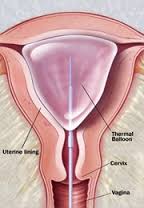
Now there is a large array of global endometrial ablation (GEA) tools. The principal mainly applies to destroying the lining of the uterus by radio frequency waves or by Cryo-freezing.  Before we decide to ablate the endometrium, we have to classify the cause of AUB. Making sure there is no intra uterine pathology. A small fibroid 2-3cm can be dealt with GEA. Make sure there is no cancer or pre-cancer pathology. It must be explained to the women that they cannot have any babies.  About 0.7 % of women can conceive after GEA, but it is always disastrous. Some clinicians even do a tubal ligation at the same time. After we have seen all the pros and cons of GEA with the patient, do an ultrasound to exclude any uterine pathology, measure the uterine thickness, made sure there is no pelvic infection, there is no scar in the uterus such as classical caesarean section or myomectomy and cervix is not loose. Every surgeon and the hospital now use the method they are competent with. GEA can be done soon after a period. Measure the length of the uterine cavity. Put the device in, which can be of different types, and once inside it they fit in with the uterine cavity.  Radio frequency waves are passed for 90 seconds while we rotate the device to ablate the total cavity. Remove the device after few seconds so that it cools down to avoid scaring of the cervix. There can be a few serious problems such as uterine perforation. The patient can be given pain relief for a few days.
The latest GEA was approved by FDA in 2015. It is called Minerva. Minerva takes only 3-4 minutes. The device is inserted into the uterine cavity. With this device, the radio frequency is delivered by ionized Argon gas to create plasma. This is controlled by Impedance. The energy is passed for 120seconds.  The other technique is microwaves; the advantage of microwaves is it can be used for a bigger uterus.  Just to name a few, Genesys HTA, Cryo-ablation and heated free fluid and so on.


SURGICAL TREATMENT OF AUB FOR MYOMAS
Myomas are called leomyoma in AUB in FIGO classification. The myomas affect about 50% of women in their life time. Many of these are asymptomatic, the main symptoms they cause are excessive or intermittent bleeding, infertility, and pressure effects due to their size, frequency of urination, constipation, walking difficulty, back ache and so on. If they are a symptomatic there is no need to treat them. Minor problems happen with an endometrial polyp. This can also cause post menopausal bleeding. It can be easily treated on hysteroscopy by removing it. We always send it to pathology as it rarely can be cancerous. The other problems are sub mucous fibroids they can also be removed by hysteroscopy resection. If they are biggish and deep you need a bit more training for this as, you may damage the uterus or rarely adjoining organs. This helps with infertility treatment. A small sub mucous fibroid less than 3 cms can be destroyed at the time of endometrial ablation particularly by the microwave method; however you lose your fertility by GET.
The other method of treating these fibroids is to do what is called uterine artery or fibroid embolization this procedure was first done in 1995. It is done by an interventional radiologist. It is best for fibroids which are within the muscles of the uterus (Intramural). There is some dispute about what is the biggest fibroid you can do it for. General agreement is if the fibroid is bigger than 10cms in size do not do it. When it dies and sloughs it causes problems.  For this procedure you are supposed to stop all your blood thinners, including aspirin and Nsaides (pain relief drugs such as Ibobrufen), several days before. You are prepared like any other operation. It is done under strict sterile conditions. You have to stay in hospital overnight. The operation is performed in the groin on one or both sides depending on the preference of the radiologist. It can be done under local or general, anaesthesia depending on how brave you are.

A small cut is made over the femoral artery in the groin. A small catheter size 1/8 of an inch in diameter is inserted and gradually guided to the uterine artery, embolizing agents are injected. These particles are about the size of sand, the catheter is than guided to the uterine artery on the other side and injected. Some radiologists prefer to use the other side for the uterine artery on the other side.  UAE should not be done if the woman is allergic to contrast media, she is pregnant, has cancer, vascular or bleeding disorders, and recent or severe past pelvic infections.  This procedure gives symptomatic relief in 83% within 6 months. Fibroids decrease in size from 40 to 70 %.   Repeat treatment was required in 15 – 28 %.  This intervention was done by repeat UAE, myomectomy or hysterectomy. Women like to have UAE as it avoids too much time off, major surgery, saves the uterus and saves fertility. The side effects are it can cause infections, damage to ovarian blood supply, problems with future pregnancy. One important side effect is post embolization syndrome. Women run a low grade fever, pain, fatigue, nausea, vomiting and this peaks in 48 hours and then resolves in one week. If it fails to resolve we should look for infection. Sometimes the material from the fibroids gets stuck in the uterine cavity, and then the women require dilatation curettage for this material to be removed.
The final surgical procedures are myomectomy this can be assisted by reducing the size of the fibroids by GnRh analogues or Ultrapristol. Then myomectomy can be performed by laparoscopy or normal laparatomy depending on individual cases. Similarly Hysterectomy can be performed abdominally, vaginal or laparoscopy assisted. It depends on the cases or surgeons preferences. After myomectomy babies need to be delivered by caesarean section.
 SUMMARY ABOUT AUB 

The new FIGO classification of AUB and many current methods of treatment have made a gynaecologists life very interesting. When you have a case of AUB first classify it and   then plan the treatment. Is it urgent, can we manage by medical treatment or she requires surgical options? Always keep few things in mind, patients age, her views, her needs, does she need contraception, future pregnancy, does she have any medical problems, social situations, and always respect her views with your line of treatment.

MEDICAL TREATMENT OF AUB

In the myometrium there are different types of chemicals which keep a balance between those which can help with stopping the bleeding and help with coagulation, others which promote the bleeding. When this balance is upset a woman bleeds more than normal. One group of drugs called nonsteroidal anti inflammatory drugs (NASIDS) commonly called neurofen or naprosyn can easily correct this imbalance, hence they are the first line of treatment for heavy menstrual bleeding (HMB). The drug most commonly used is Mefenamicacid. It is best to take 500mgm of this tablet just before your period is about to start or just started with a glass of milk. This can upset your stomach hence I am suggesting milk. Subsequently you can take 250 mgm tablets two to three times a day. They help with period pain as well. This can be done during the duration of bleeding. If it helps you it is very good. If you suffer from Asthma, be careful taking NASIADS.  The other side effects of these drugs can cause diarrhoea and gastric upset. In my practice I used Naprosyn SR (Slow release, meaning continues pain relief) 1000 mgm once a day with very good effect.
The other drug very useful for any bleeding problem is Tranexamic acid including HMB orAUB. It is the most effective and safe drug needed in the medical system. The WHO lists it as the most essential medicine. It is available around the world in almost every country under different names. It can be used in any type of bleeding, gynaecology, trauma, and obstetric. It can be used as intravenous in severe emergency. It is a cheap drug. Tranexamic acid is used to prevent the fibrin not being totally consumed when there is profuse bleeding thus it acts as antifibrinolytic agent, after certain other activities go on in the bleeding and clotting cascade. Thus protecting the fibrin; for coagulation. Women are advised to use 1gm of tranexamic acid 4 times a day during the bleeding phase. A dose of 4 gms can also be used once a day. If urgent tranexamic acid is required a dose 10mgm per kg body weight is given intravenously, 6 hourly slowly over a 20 minutes period. This does not relieve pain. None of these two drugs are contraceptives. When prescribing treatment for AUB it is very important to have the woman’s input while offering her the treatment. Using Tranexamic acid for treatment there is concern about thromboembolic (thrombosis) problems. However a recent study from Sweden did not find any risk. Other side effects include headaches, colour vision change, musculoskeletal pain, stuffy nose and fatigue.
The next and the easiest treatment are combined oral contraceptives (COC).These act by suppressing the ovarian activity. You do not have to worry about if the bleeding is ovulatory or anovulatory. Make sure the woman’s blood pressure is not raised, she is not a smoker. The COC help with the pain as well, period pain usually happens with ovulatory period, COC stop ovulation choose suitable pill if she has pimples or PMT. They can be offered to use the pill for 3-4 months without a break. Have a period 3-4 times a year. If the tablets are causing breakthrough bleeding, the type or the strength can be adjusted. You have to make sure she is happy to use contraceptives.
For anovulatory bleeding which is often erratic and irregular you can use progesterone in the second half menstrual cycle. This can regulate the cycle and decrease the bleeding. It can be norehisterone (PRIMOLUT) 5 mgms three times a day for 12 -14 days of each cycle. This is not a contraceptive. If contraceptive is desired than COC is the best to regulate the cycle as these put the ovaries to sleep. A very good alternative is an intrauterine IUD called Mirena (LNG- IUS) this t shaped IUD with levonorgestral stored on it. It releases 10microgms every day. It can be easily fitted in the uterine cavity. You may have a period like pain for a few days .In the next 6 months you may have irregular bleeding but then it settles, remains for 5 years; generally you do not have any period problems. You can have it removed at your convenience than can get pregnant. If you are young and have never had a baby, then there is a younger sister of Mirena. It is called Skyla it is smaller in size, and has less levonorgestral and is good for 3 years. Mirena, is suitable for most women.
Some clinicians advise to use what is called GnRH. This is a very expensive drug. I personally do not feel we need to use it here. It causes menopausal symptoms and then you have to add back HRT. If you are older and fertility is not a question than a minor surgical procedure called endometrial ablation is excellent. If for some reason; for example endometrial thickening or the woman has any risk factors for endometrial cancer Hysterectomy is the best answer.
The risk factors for endometrial cancer are obesity, weight more than 90kgs, diabetes, infertility and nulliparity, atypical endometrial hyperplasia, fibroids, Tamoxifan (used as prophylaxis against breast cancer recurrence) family history   and age more than 45.
Treatment for coagulation disorders
It depends on the severity of the problem, age, need for preservation of fertility. If the problem is not acute and the woman is happy or desires contraception can, COC is the best treatment to start with. Before starting this treatment study the factor VIII and vonWillebrands factor, as hormones increase the factor VIII, vonWillebrands factor, thus they can mask the diagnosis of vonWillebrands disease. Treatment can be started with COC pill. Often this may be enough, as they enhance the factor VIII and vonWillebrands factor.
If not we can use tranexamic acid 1gm 4 times per day during the bleeding phase.
Desmopressin (DDAVP), it is a synthetic hormone similar to the natural hormone vasopressin. Many doctors use it as a first line of treatment. Some women use the nasal spray (STIMATE) at the start of the bleeding. It works by making the body to release vonWillebrands factor stored in the lining of the blood vessels. The other treatment can be blood clotting factors infusion. This contains factor VIII and vonWillebrands factor.
Another product approved by FDA is genetically engineered vonWillebrands factor called Vonvendi. It contains no plasma hence there is no risk of viral infection or allergy.
If the bleeding is due to platelet deficiency a platelet transfusion is given. Involvement of a haematologist is required in these situations. Oral progesterone has been tried but it did not show any benefit and hence not commonly used.
Progesterone injections called Depo-Provera (150mgms per ML is injected every 12 weeks. It is a contraceptive and does not have too many side effects, there is one problem,   and it causes amenorrhea in 50% hence oestrogen deficiency. This can result in osteoporosis, if used long term. Women loose 1% of their bone density in one year’s use of Depo-Provera.
DANAZOL is another synthetic hormone which is often used more so in the past. It helps with period pain to some extent. It causes endometrial atrophy it acts by suppressing ovarian activity. 30% of women get amenorrhea. It used to be used more often in the past in the management of endometriosis. We have come a long way to manage endometriosis.The dose of the Danazol is 100 to 200 mgms/day.  One serous side effect is masculization. If by chance the woman gets pregnant, it causes masculization of the female foetus. Again this is not a contraceptive, so you have to discuss contraception with a woman, if she desires it.


GONADOTROPIN RELEASING HORMON AGONISTS (GnRH)
This is a very useful treatment for premenopausal female. It is generally used when other medical or surgical treatment is contraindicated or not accepted by the woman. It is expensive. GnRH works by inducing a hypogonodal state that means that the ovaries are suppressed. Women start getting hassled by menopausal symptoms, hot flashes, night sweats, and dry vagina.  HRT is required. A synthetic drug called LIVIAL is used for HRT. It is very useful for decreasing the size of fibroids. A course of GnRH is given for 4-6months before surgery is planned. It is also used when a decision is made to do a uterine artery embolization. This procedure is done by the radiologists. At this stage it is not common as it needs a lot more work on it. The drugs used as GnRH is Leuprolide acetate 3.75mgms/month or as 11.25 mgms intramuscular every 3 months. The other drug is Nafarelin which is used as intranasal spray 200 micro gms twice daily. Some clinicians   consider GnRH to be, the first line of treatment for adenomyosis as it helps with pain.  Levonorgestral IUD (LNG -IUS) is also useful for adenomyosis.
Ulipristal acetate which is a selective progesterone receptor modulator. In common English it means, it blocks the action of progesterone therefore it is useful to prevent pregnancy and is also very useful for decreasing the size of fibroids as progesterone promotes the growth of the fibroids.
The other conditions are treated depending on the what the problems are such as hypothyroid they are given thyroxin, if a woman has high prolactin she is given a drug called bromocriptine (2.5 mgms daily). It acts by decreasing the production of prolactin from the pituitary gland.
  
Treatment of acute very heavy menstrual bleeding
We can divide this in two parts
Make sure her general condition is not too bad, she is not hypovolemic. Does she need resuscitation or a blood transfusion? Make sure there is no bleeding disorder, put up an IV drip, and arrange, blood for a transfusion. For stopping the bleeding we usually give 25 mgms of IV Premarin every 4 hours until the bleeding stops. It usually stops in 24 hours.If the bleeding continues we can use tranexamic acid IV 10/20 mgms per kgms body weight, twice a day, no more than 650mgms per injection for 2-3 days. Once the bleeding settles down we can give, COC pill three times per day which contains 35 microgms of ethinyl oestradiol, or oral progesterone(Medroxyprogesterone acetate) 25mgm, three times a day for 7 days. Later on we may find some anatomical features that require surgical treatment, we deal with them.
In some situations and in some places when the modern facilities are not available, old fashioned dilatation and curettage still comes to our rescue. It stops the bleeding, and gives us the lining of the uterus to study.  We can see if there is any evidence of infection, then the woman can be given suitable antibiotics, or if there is any atypical thickening of the lining of the uterus (which can be precancerous) or if the woman is older, is there any evidence of uterine cancer?
In some situations when the woman is on anticoagulants, she suffers from AUB, it is a real challenge. Temporarily one can stop her anticoagulants or decrease the dose, but is only a temporary measure.  Different specialists e.g. cardiologists in case she has cardiac prosthesis, thrombosis intern, gynaecologist, haematologist and a physician should be involved. Excluding cancer and major gynaecological (Large fibroids, ovarian cysts) we should aim to treat them medically. The treatments which have been used and are useful is Tranexamic acid, COC cannot be used. However Tranexmic is not a contraceptive. Depo -provera injections have been used short term, with some success .Mirena (LNG-IUD) is useful. Minor side effects are breast tenderness, pain and cramps, headaches some irregular bleeding. Big advantage, it is a contraceptive.

Endometrial ablation is a very simple and effective treatment; however you lose your fertility.

INVESTIGATIONS AND MANAGEMENT OF ABNORMAL UTERINE BLEEDING

According to some literature references 30 to 60% of women in their life time see a doctor for abnormal uterine bleeding (AUB). The bleeding during pregnancy is not included in this, there are special reasons why bleeding happens during pregnancy. Before we start investigating for AUB, we always start with a pregnancy test and make sure the woman in question is not pregnant; the bleeding is not acute and severe. We must ask specific questions about her menarche, periods  duration ,regularity ,how long does her normal period lasts , how many days does she bleed and how much. When did this abnormal bleeding start, has this been happening since the start of her periods. Does she have any bleeding problems such as bleeding from the nose, bruises at the dentist or any other time such as at delivery of her baby? Is there anybody in her family who suffers from bleeding problems? Does she have any medical problems or is she taking any drugs. As we go to the tests and management of these women we will find that these questions play an important role.  As mentioned in my previous posts the menstrual cycle usually starts around 12 – 14 years of age, it happens 28-31 days interval, lasts for 5-6 days and average blood loss is about 80 milliliters. Any bleeding that happens, in between period or at any odd time, lasts for longer than 7 days, heavier than usual, you are passing blood clots or happens after sexual intercourse is AUB.
Next thing we must do is to get these women’s, age, weight and blood pressure. If they have been bleeding too much they look pale, have low blood pressure, and a fast pulse, and often need urgent management. Very obese women are more likely to suffer special disorders such as, diabetes, lower thyroid activity, this can also cause AUB. The other hormone problem in obese women is a condition called polycystic ovarian syndrome (POCS).This can cause both absent periods and AUB. Besides this obese women and women with PCOS are both more prone to uterine cancer.
On further investigations we do a clinical abdominal and vaginal examination. We make sure that the spleen is not enlarged, as in some bleeding conditions, the spleen is enlarged. In the lower abdomen any lumps indicate structural diseases such as uterine fibroids, ovarian cysts. We have already excluded a pregnancy by doing a pregnancy test. Vaginal examination further confirms these abdominal findings. It may show any pathology on the cervix such as a polyp or cervical cancer. Any vaginal pathology can also be observed at the same time. This will help us to know that the bleeding is coming from the uterus. If there is no bleeding we can also do a cervical smear. At this stage a rectal examination can also be useful making sure that the bleeding is not from there.
Sometimes the bleeding can come from the bladder, and we also note that there is no trauma by injury or sexual interference.
Let us now go to the blood tests. First group of blood tests are done to make sure that a woman is healthy.
We do a full blood examination; haemoglobin is a part of it, iron studies for her iron levels. Bleeding and clotting profile is also studied,Theses includes  Prothrombintime, international normalized ratio (INR), Activated thromboplastin time particularly platelet count. If these tests are not normal, then further tests can be ordered for vonWillebrands disease. In von Willebrands disease there is excessive bleeding due to clotting factor disorders.(vonWillebrands disease is genetic )
In this case the woman may tell you that she has been having heavier bleeding since the start of her period as compared to her friends. These tests are vonWillebrands factor antigen, ristocetin cofactor activity, factor VIII, vonWillebrands, factor multimers. All these tests indicate what type of von Willebrands disease you have and how to treat you. Thrombocytopenia (Low platelet count) can also cause severe bleeding problems. Normal platelets in our blood are 150,000 to 450,000 per microlitre of circulating blood. The platelets live only for 10 days; new platelets are made regularly in the bone marrow. The spleen deals with dead platelets. A platelet count of less than 10, 000 can cause severe bleeding. I have encountered one German holiday maker with very profuse bleeding whose platelet count was 6,000. We gave her a platelet transfusion and tranexamic acid. Her bleeding was well controlled. We had to find out why she had severe thrombocytopenia. Thrombocytopenia can be inherited, immune disorders such as in lupus and rheumatoid arthritis, leukaemia, septicaemia (blood infection), severe kidney disease, drugs such as some antibiotics and simple drugs as aspirin. There is transient thrombocytopenia in pregnancy; this is a natural protection against the increased risk of thrombosis during pregnancy.
Other tests are endocrine tests. The most important is plasma progesterone. This will tell us if the menstrual cycle is ovulatory, if the test indicates the presence of plasma progesterone. This test should be done on day 21 to 23 of a regular 28 days menstrual cycle. The other important tests are thyroid function test as thyroid disorders can often cause AUB, and often thyroid problem can be silent. Prolactin is also important as this can also cause AUB. Other hormone tests are androgens to exclude PCOS (Polycystic ovarian syndrome). Diabetes should be excluded as it has a high risk for endometrial cancer, which causes AUB.


There are many drugs that can cause bleeding problems, these include Aspirin, Anticoagulants, Antidepressants, hormones used for HRT or contraception such as MPA and Implanon (little rod inserted in your arm for contraception).Phenothiazines, cortocosteriods,Thyroxin can also cause AUB. Besides these some herbs can also cause abnormal bleeding such as ginseng and ginkgo biloba and soya products. I had the first hand experience of this while doing a caesarean section. For some unknown reason this woman kept bleeding and later on she told me she was on ginseng.
An ESR and CRP can also be done to look for any infection.  Pelvic infections are not usually the cause of AUB but in some situations this can happen, such as early tuberculosis and Chlamydia. We also look for many medical disorders such as leukaemia, Celiac disease, severe liver and kidney disease breast cancer, if the woman is on, Tamoxifan (Drug used for prophylaxis in breast cancer). Tamoxifan can cause endometrial polyps and endometrial cancer (Endometrium is the lining of the uterus) the next series of tests we do are for structural abnormalities. These are also used for treating these problems. Ultrasound is the most important of these. An Abdominal Ultrasound is only done if we can feel a lump from the outside or the uterus is enlarged, otherwise a vaginal ultrasound is performed in women who have been sexually active. This gives a lot more information. This is done by a vaginal probe which is moved around in the vagina, we can see the lining of the uterus, measure its thickness see if there are any polyps, fibroids or uterine adhesions. Next thing we can do is called a saline sonography. 10 mls of saline solution is instilled in the uterine cavity and pictures taken by transvaginal ultrasound.  This shows the details of the uterine cavity.

An endometrial biopsy can be done by a very fine instrument called a Pipelle. This gives us a good idea about any endometrial pathology and also can give us idea about hormone status of the endometrium or if it is thickened. This is done in the clinician’s office without anaesthesia. The woman may have a watery discharge and transient period like pain. 


The final test that is useful is an MRI. This may not be available in all the centres, however if available it is very useful to give us detailed information about how many fibroids there are and where they are located in relation to the uterus. This is useful in planning the treatment. When we are dealing with these cases of AUB it is a good idea to involve a Haematologist if there is bleeding disorders, a Physician if they have medical disorders, and if cancer is found it is a good idea to involve or refer to a gynaecological cancer surgeon.