Thursday, June 14, 2018

POSTMENOPAUSAL YEARS


We the clinicians as well as the women, all worry about hot flushes , night sweats , bladder problems, insomnia and mood swings, but do not think about heart problems in peri and post menopausal women .  However the fact remains that the highest cause of death in women after 50 is cerebrovascular disease (CVS) and stroke. These account for 75-76% deaths in western society as compared to deaths due to breast cancer which is 6-8%. Out of every 3 deaths in women 1 is due to CVS. We have to start paying attention to this and prevent them from happening. There is a 10 years lag time when this happens in women as compared to men, unless women have a premature ovarian failure, premature menopause or early surgical menopause. Women lose oestrogen, this causes the blood vessels to become stiff, lose their elasticity, blood pressure increases and this increases the strain on the heart. The LDL (Low Density Lipoproteins) and Triglycerides (bad cholesterols) increase. HDL decreases (good cholesterol). Insulin resistance increases leading to, prediabetes and diabetes as time goes on. Oestrogen also effects fat stores slows metabolism, this leads to weight gain and an increase in BMI and increase in abdominal girth. These are not ideal to prevent heart disease. The coagulation factors are altered, such as antithrombin3, factor 7c and plasma fibrinogen are all increased, leading to increased risk of thrombosis. So the risk of heart disease becomes multi factorial, there is increased blood pressure, strain on the heart, diabetes, obesity, changed cholesterol, increased thrombotic factors and increased sympathetic tone. All these lead to, metabolic syndrome and CVD. Some research has indicated that changes in cholesterol, apoproteins B, happen within the one year after the final menstrual period where as most other changes are related to chronological age.
What are the symptoms of CVS and heart disease? Heart Palpitations, Shortness of Breath, Light Headedness, Headaches, Diabetes, Swelling of the Feet, (change in the rhythm of the heart) Fibrillation, Pain in the Chest and Stomach. Women often do not have a chest pains when they have a heart attack. For neurological problems (Stroke); a women may not be able to smile put her tongue out and cannot lift her arms above her head (these are very simple test for the public to work out what is happening) . Take them to a hospital immediately if this is happening. If stroke sufferers are treated within 4 hours they suffer very little residual damage. It has been shown that if treatment for prevention of long term CVS is started soon after menopause or within 10 years of menopause, these can be prevented.                        Most women need treating for hot flushes, night sweats, lack of sleep, mood swings, dry vagina and psychosexual problems, why not give them MHT (Menopausal Hormone Treatment) and not let them suffer and also prevent them from long term  effects of oestrogen deficiency such as increased risk of CVS and osteoporosis. This early period of peri menopause is called period of opportunity. Later on after many years of menopause, changes in women’s blood vessels have already occurred and oestrogen is not helpful. If a woman has a uterus and she needs oestrogen, she needs progesterone as well for uterine protection from cancer; a form of progesterone called micronized progesterone is recommended. This has less side effects and is better tolerated. For prevention of thromboembolic problems dermal oestrogens are prescribed in the way of oestrogen patches and or jelly.  Women should watch their weight, abdominal girth, exercise, nutrition and quit bad habits such as smoking, excessive drinking of alcohol and soft drinks and being a couch potato.
It is very important to start MHT during the WINDOW of OPPORTUNITY to prevent cardiovascular disease, which is the main cause of death in women in later years.  

Thursday, May 31, 2018

NUTRITION DURING PREGNANCY


When a woman starts thinking of getting pregnant, she should start a good pre pregnancy health regime. If she wishes to get pregnant in the near future she should make sure that she is not overweight, obese or too thin. Her blood pressure should be normal and thyroid function tests, blood sugars as well as basic bloods are within normal range. Besides all these it is very important to take 400 mcg of folic acid every day. This has been proven without doubt that this prevents occurrence of neural tube defects (abnormalities  of brain and spinal cord) in the new born. This is able to prevent it by almost 70%. These are far more common in the Asian population. I feel folic acid pre pregnancy and the first three months of pregnancy is recommended all over the world. In fact many foods are fortified with folic acid. Women may continue to take it for the rest of the pregnancy. When pregnancy begins many women feel that it is happening very quickly, within two weeks, some start getting sick and get a feeling of liking or disliking certain foods (This is called pica of pregnancy).The sickness of pregnancy is called morning sickness, as it is worse in the mornings. The medical word for this is nausea and vomiting of pregnancy. This usually settles down after 12 weeks, however it can continue throughout the pregnancy in a small number of women. If it is severe then the care givers, have to watch for dehydration, too much weight loss and rarely liver failure in women who were already malnourished in poorer socioeconomic countries. These women are often admitted to the hospital for supervised treatment of morning sickness.   The morning sickness happens during pregnancy  due to hormones; Chorionic- gonnadotrophins hormone of pregnancy, increased levels of oestrogens, increased sense of smell and taste, sensitive stomach, stress and unhappy surroundings. In general it can be controlled by a gentler life style, dry snacks, cooled food, less fat, small and frequent meals and adequate rest. Vitamin B6 is very useful. Ginger and its preparation; such as tea, candy, ginger ale, are all excellent. In fact in very ill women we use ginger injections in a hospital setting and for some women there are tablets which help with day to day work. I have used a preparation like a balm which had Vitamin B6, lemongrass, ginger, and women inhaled the balm and found it to be very useful. Acupressure on the wrist points and an acupressure wrist band is also useful. It is just like the one used for travel sickness. If you are well eat normal food like grains, complex carbohydrates, protein, lean and cooked, fish free of mercury, cheeses’ made from pasteurised milk, not soft  cheese, and not processed meats, small quantity of good fats. A good range of assorted fruits, vegetables and dark green leafy vegetables; depending on the seasonal growth in your country. Avocado and spinach are two of the best foods both for vegetarians and non-vegetarians. Avocado has Omegas 3 fatty acids, Vitamin B5 (pantothenic acid), Vitamin K and C, phosphors, iron and fibre. Half an Avocado per day is very useful, however more than that, you may put on weight. Please do not fall into the mindset of thinking that you need to eat for two.   Women need to increase their calories by 300 for a single pregnancy and 600 for a twin in the first trimester. 300 calories are equal to a glass of fat free or low fat milk and a medium sized half a sandwich. Please do not eat food full of calories and have no food value. Women need many vitamins and minerals, Iodine and Selenium for foetal thyroid and brain development. Calcium and Vitamin D for bones, Iron, Copper, Zinc, Vitamins B1, B6, B12, C , K, E, are required for immunity and other developments.
Nuts, beans, and lentils, are also very important particularly for vegetarians.  Try to keep your weight gain to about 2 -4 kgs in the first trimester. A weight gain of 25 -35 kgs is best for the whole pregnancy. If a woman has a balanced diet she may get all her vitamins and minerals, however inmost countries there are special pre natal capsules which provide all the nutrients. It is worth while taking a capsule or a tablet daily throughout the pregnancy. If you put on too much weight in the second or third trimester, a woman runs the risk of diabetes or blood pressure (Preccelamsia) of pregnancy.  Both these conditions, make the pregnancy complicated and can also cause long term problems. Do not eat for 2 as already mentioned and be aware of the following points: - Do not eat shellfish which is raw, raw eggs, refrigerated and smoked food as it can have Listeria.
Women must abstain from alcohol, limited caffeine intake (one medium cup in 24 hrs), over the counter food from take away places, unwashed fruits and vegetables. Make sure that your hands, cutlery and crockery are clean.
Generally in the first trimester women can have 1800 calories, in the 2nd trimester 2200 and the 3rd trimester 2800 calories.
During lactation women have to worry about her nutrition as well as baby’s nutrition. Please maintain the calories required. Do not start funny diets to lose weight in a hurry, gently do it with restricting too much sugar, fat, and increased exercise levels. Most important nutrients required are, calcium, iron, Vitamin D, vitamin B12 and Iodine. Stick to your diet rich in protein, whole grains, nuts and seeds. Avoid too many juices, as they produce a change in the taste of breast milk and babies do not like it. Do not drink too much coffee (may be just 1-2 cups in a 24HR period) as this makes the baby’s restless and upsets their sleep. For women who may not get enough, Vitamin D and B12 they can take supplements. Iodine is also very important for the baby’s brain development. These can all be obtained from prenatal supplements. Iodised salt can also provide the iodine. Please watch your food intake and notice the baby’s behaviour, avoid foods that upset the baby. Many foods can improve your milk supply; these include Fenugreek seeds, oats, nuts, fennel, and many local healthy food items.  Grandmothers and lactation consultants can be of a great help with a woman’s lactation problems, depending on where they live in the world. A woman must take care of calcium, vitamin D, B12, Iron, and Iodine intake. Avocado is an excellent food for lactating mothers.

Thursday, May 10, 2018

OSTEOPOROSIS

Are you at risk?
The biggest osteoporotic risk factor is simply being a woman. You are ten times more prone to suffer from osteoporosis at an earlier age than your male counterpart.

Osteoporosis means, fragile bones, these bones break easily by slightest trauma. One in four women suffer from osteoporosis with increasing age after menopause 
Women suffer more
1) They have an initial lower bone mass
2) Have a higher bone loss with age particularly at menopause when oestrogen is decreased, as they are the most important hormones in keeping the bone mass.
3) Women live longer.
It is estimated that about 56% of women suffer from a fracture after the age of 60.These fractures include spine, hip, wrist, ribs and upper arm. This makes life difficult and painful.

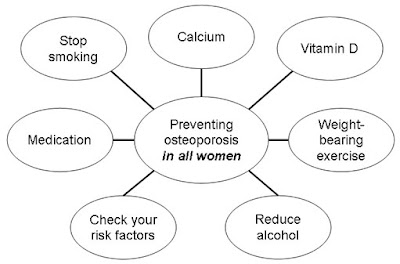
Osteoporosis is somewhat difficult to treat but easy to prevent. This prevention should start early in childhood with good nutrition, plenty of milk and calcium as this is required for bone formation, sports activities, and sunshine as this gives us vitamin D. This should continue in adolescence. The maximum bone mass is achieved in our late 20s to early 30s, after which it begins to decline. Fractures are the main side effect of osteoporosis and they should be prevented. However besides osteoporosis there are many other risk factors which can cause fractures.
These include:-
1) Being a female
2) Age
3) Weight and height
4) Parental hip fracture at a young age
5) Smoking
6) Alcohol
7) Glucocorticoid drugs
8) Antidepressants called serotonin uptake inhibitors
    For example- Prozac
 9) Drugs for acidity called proton pump inhibitors
10) Vitamin D and K deficiency
11) Personal history of soft trauma fracture
12) Rheumatoid arthritis
13) Ethnicity-(Caucasians have the highest risk for fractures.)
14) Premature menopause
15) Lactose intolerance and bowel problems
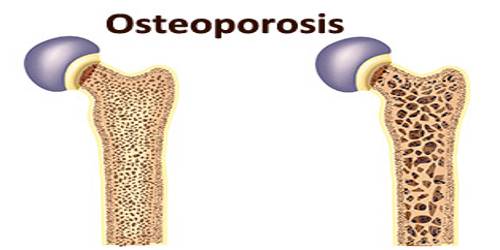
When we talk about osteoporosis we always wonder how to make this diagnosis. There are many tests to make this diagnosis, which I will talk about in the next few lines. However it is clear from the above list that assessing the fracture risk is even more important than making the diagnosis of osteoporosis. Many women have fractures without osteoporosis.  There are several tools by which fracture risk assessments are done .The tools WHO: uses are called FRAX, WHO does not always include BMD in their risk assessment. These tools depend on local factors, such as facility for bone density, local economic factors, reimbursement by insurance and people willing to pay for health issues. There is no unified strategy to use. Basically if fracture risk is high, the individual is treated pronto, if intermediate do BMD and reassess, if low follow the normal protocol. Bone is a living tissue it is constantly being made and destroyed this keeps a balance. It is under the control of many chemicals and hormones. It consist of a mesh if proteins called collagen in which minerals are deposited mainly calcium. The tough outer wall of the bone is called cortical bone; the inner tissue is called trabecular bone or spongy bone or cancellous bone it is, porous and contains bone marrow, produces blood cells.
Normal Bone                          Osteoporotic Bone


It is this part of the bone that loses its minerals; it is mainly calcium and becomes thin, thus causing osteoporosis.  99% of our body calcium is stored in our bones. There are two types of cells involved in our constant bone remodelling. They are called osteoblasts which form the bones and osteoclasts which destroy the bone. A fine balance is maintained in this activity to keep the bones well tuned, maintain body calcium levels, as this is very important for the activity of the heart and muscles. As already mentioned this is controlled by various hormones and chemicals in the body. Bone modelling and remodelling is done at the same time. The bones are also sculpted. The maximum bone mass is achieved at around the age of 30, after which it slowly starts to decrease. The adult skeleton is replaced about every 10 years. The oestrogens keep the bone destroying cells osteoclasts under control, and maintain the beneficial role of vitamin D.
So why does osteoporosis happen?
Many of these reasons overlap with fracture risks:
1) Oestrogen deficiency in women which happens at menopause, testosterone deficiency in men which happens with aging.
2) Under activity of adrenal glands (a hormone producing gland in our body).
3) Under activity of a hormone Calcitonin (produced by the Thyroid Gland)
4) Over activity of another hormone called Parathyroid.This drains the calcium from the bones.
5) Under activity of the pituitary gland. This is the most important hormone producing gland in our body. It is often called the band master of the body orchestra.
6) Prolonged absence of periods which results in oestrogen deficiency caused by: anorexia nervosa, excessive exercise ,high Prolactin level, a hormone which comes from the Pituitary gland, surgical removal of ovaries or prolonged suppression of ovaries for medical treatment). All these cause oestrogen deficiency
6) Hypogonadism (poor functioning sex glands or may come from the poor activity of the Pituitary ) again Oestrogen is depleted in women and likewise Testosterone in men.
7) Brittle bone disease (Osteogenesis imperfecta) .
This is a genetic disorder where the bones are fragile due to defective collagen, and break easily. It can be mild to severe. 
8) Malabsorption syndrome, chronic inflammatory bowel disease
9) Drugs, corticosteroids, heparin, antidepressant and proton pump inhibitors (used for acidity of the oesophagus and stomach)
10) Chronic diseases, diabetes, renal, arthritis, liver, multiple myeloma, Systemic lupus Erythematosus (these two are complex diseases) and HIV.
11) Prolonged immobilization.

DIAGNOSIS OF OSTEOPOROSIS AND FRACTURE RISK
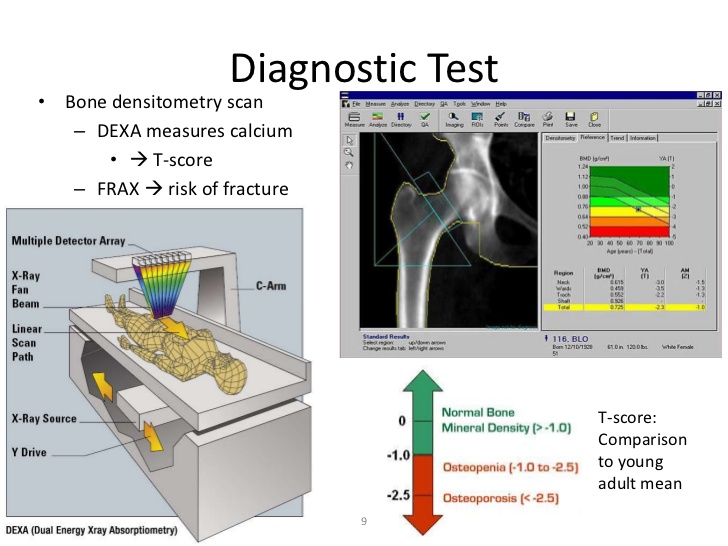
The thoughts on diagnosis of osteoporosis should start with a woman’s personal history and risk factors which have been enumerated in the previous few lines for example long term use of corticosteroids, smoking weight below BMI of 21. However X-rays play a most important role in the gold diagnosis of osteoporosis. The best of these tests is called DEXA; in simple words we can call it bone densitometry. The test measures what is called BONE MINERAL DENSITY (BMD), it measures a certain amount of minerals and tissues in a certain volume of bone (W/G/CM2). This tells us if the bone is normal or a certain amount of bone is lost. This is expressed on 2 measurements, T score, which compares it to a young white young woman 30 years of age. The other is called Z score, which compares it to the bone density in the same age group. 
A T score of -1 is considered osteopenia, a T score of      -2.5 or below is considered osteoporosis. This is an expensive test costing approximately $125 American dollars, and also it is not available in many parts of the world, nor is it advocated routinely.  At the time of bone density assessment you do not need any preparation you just lay on a machine with your clothes on, the machine then scans your body, it takes about 15 minutes and reports are calculated.

The fracture risk is expressed at the same time. Different fracture risk tools are used in different countries. Bone density is not always used to assess fracture risk.
Besides DEXA scan, different types of x-ray studies are used, QCT, (quantitative computerised axial tomography), ultrasound of the heel, plain lateral x-ray of the thoracolumbar region of the spine, this is often useful when we cannot do BMD.
Several basic blood tests are required to exclude many other problems:-
1) Normal Full Blood Examination.
2) Hormones, Thyroid, Parathyroid, Oestrogens, Pituitary and Testosterone in men.
3) Alkaline phosphatase, Homocysteine a congenital problem in causation of osteoporosis.
4) Serum calcium and vitamin D
5) Bone turnover markers, are a recent tool which measure the end products of osteoblastic and osteoclastic activity of bone in serum, blood or urine, which gives us what is happening to the bones. These are rapid, reliable and cost effective tests. One has to understand its biological analytical and standardization process. At this stage these are very useful for fracture risk assessment independent of B.M.D. In clinical practice it is useful to assess the progress of people on osteoporosis treatment particularly those who are on a given treatment to prevent bone reabsorption. One can also check on patients to see if they are compliant to the treatment.
What is the treatment of Osteoporosis and who should be treated with what?
Osteoporosis (OP) is a silent disease; hence it is under treated in most countries of the world.  The other problem is poor patient compliance due to forgetfulness, side effects and not understanding the consequences of the problem. We have to overcome these problems with education, good reminder methods, minimizing the side effects or changing over to a drug more acceptable to a woman.  Prevention of OP starts in childhood with good nutrition exercise and sunshine. This should continue at all ages, a woman needs to take about 1000 to 1300 mg of calcium daily. Too much calcium can cause some cardiac problems; hence there is some international debate on this issue. This should be accompanied by 800 international units of Vitamin D (1 microgram of Vitamin D is = to 40 INU); this can be taken as a lump sum once a month. One of the main roles of Vitamin D is to absorb calcium from the gut, allowing calcium and phosphorus levels to control bone formation. It also keeps the parathyroid gland under control. Sunshine for a few minutes in summer is adequate to make up your Vitamin D, may be a short walk at lunch time, prolonged sun exposure does not keep increasing your vitamin D; however it increases your risk of skin cancer. If the UV index is more than 3, sun exposure should be avoided. This is to prevent the risk of skin cancer.
Lifestyle factors should be improved, such as; stop
smoking,  limit alcohol intake, along with soft drinks, tea, coffee and sugar. Try and decrease your weight, if you are very overweight and see if some of the drugs you take for other diseases can be readjusted. Some studies have shown a role of vitamin K, but at this stage it is not recommended for the treatment of OP.
Pharmacological treatment is recommended in almost all pre and post menopausal women under the age of 60. Initially they were prescribed a drug called PROFOX (a combination Prozac and Fosamax) which in my opinion was no good. Fosamax has its own side effects and Prozac is no good for OP. In the first 5 years of menopause not only do women lose 1% of their bone density, they lose collagen from the skin thus losing its thickness, losing intervertebral discs which make one fifth of the length of the spine, there are emotional changes due to lack of oestrogens, at times of life cycle as postpartum, premenstrual, so in my view hormone replacement treatment will be the best treatment before the age of sixty. It will take care of all other symptoms for example: hot flushes, poor sleep, depression and all that goes with menopause and prevent losing bone. Many clinicians are reluctant to use HRT because they have not familiarised themselves with its use. Depending on if the woman has a uterus she can have oestrogens and progesterone, otherwise if she has no uterus oestrogens alone do very well. Many different types of oestrogens and progesterone can be taken by different routes to prevent side effects. They decrease risk of hip and spinal fracture, bowel cancer, heart attacks and mortality. After 5 years of treatment bone density has been shown to rise by about 10 %. The only risk is a very small risk of increase in breast cancer. The Thromboembolic risk (Thrombus) can be managed by using Transdermal (on the skin) oestrogens. The breast tenderness and vaginal bleeding problems are easily managed.
Bisphosphonates is the main group of drugs used by most clinicians as the first line of treatment.
Who should be given these drugs?
1) Those that have had a minimum trauma fracture have a high fracture risk with or without using BMD
2) Those with a T score of -2.5 or lower.
3) On high doses of corticosteroid for more than 3 months
4) High risk factors for OP
Various Bisphosphonates
Alendronate: 70 mg orally once weekly.  On the remaining 6 days women can take vitamin D and calcium in the usual dosage
The other Bisphosphonate often used is Risedronate: 35 mg orally once a week or 150 mg once a month.
Ibandronate: 150mg orally once a month or it can be given 3 mg IV every 3 months.
Zoledronic acid (another Bisphosphonate) is given
5 mg in 100mls IV slowly once a year.
Bisphosphonates are advised to be taken on an empty stomach first thing in the morning with a glass of water, after that keep standing, do not eat or drink anything else. Bisphosphonates attach to the surface of the bone thus slowing the activity of osteoclast cells. Bisphosphonates have many serious side effects. The main side effect of these is gastric upset and esophageal burning, nausea, vomiting, joint and muscle pains, fever, loosing of teeth, jaw pain, constipation and fatigue. One of the two very rare complications quoted are osteonecrosis of the jaw and atypical fracture of the femur. These usually, only happen if they are used in very high doses for bone cancer. There is no definitive date as to how long this therapy should be used. No therapy is indefinite, after 1-3 years or if there is another fracture it should be reassessed. It is believed that the benefit of Bisphosphonate treatment can last up to 5-10 years, however it is worth while repeating BMD , BTM , and fracture risk after 1-3 years.  During this time calcium and vitamin D should be continued. Combination therapy with other drugs does not provide any benefit.
Denosumab, is the latest achievement in the treatment of osteoporosis. It is used as a first line of treatment in some countries. It is a monoclonal antibody (like a vaccine) and attacks only one type of cell. It works by disabling the maturation and activity of osteoclasts, and the only problem is that its effect does not last when the drug is stopped. Before starting Denosumab assess the oral cavity to decrease the risk of osteonecrosis of jaw (this is very rare), and make sure there is no hypocalcaemia. There is some concern about its effect on the immune system (increased risk of infections) and its use after bisphosphonates, on the bone after treatment is stopped. The dose of Denosumab is 60 mg in 1ml given every 6 months subcutaneously, (meaning under the skin). It can cause side effects like any other drug and you can get this list from your caregiver. A 5 year trial with Denosumab has been very successful. Its use decreased the risk of spinal fractures by 70%, hip fractures by 40%. It does not have a cancer risk. The cap on the syringe is latex so let your caregiver know, that you have a latex allergy. There is a special programme called Provital, which can keep reminding you when your next treatment is due.
The other very simple treatment for OP is Raloxifene. This is a special oestrogen which has different actions in different organs, hence effective with bones; it does not cause breast cancer. The dose is 60 mg daily, taken orally and you do not have to fast. It should not be given to people who have a history of deep venous thrombosis or have been immobilised for a long time.
Teriparatide: Is a synthetic form of Parathyroid hormone and acts by decreasing bone resorption and improves bone formation. 20 micrograms are given daily by subcutaneous injection. Its use is restricted to 18 months as its long term use caused bone cancer in animals. It is recommended that it is followed by Bisphosphonates.
Abaloparatide is the latest drug that is being used in place of Teriparatide.
It is recommended that any treatment is followed every 1, 3, 5 years depending on the individual situation. Treatment should be offered for various disorders, which cause secondary osteoporosis.
There are many new drugs and treatments now available in different situations.
So much on osteoporosis why is it such a significant problem? Life expectancy is increasing hence the risk of osteoporosis is increasing. There are almost 200 million women in the world who have osteoporosis, may be many more about whom we do not know. There are 8.9 million known fractures caused in the world annually. It costs 70 -20 billion US dollars to treat them. Do not forget that in most parts of the world many are never treated. It was estimated that a fracture occurs in the world every 3 seconds. Osteoporosis is a silent disease, it causes untold problems to the individuals, pain, disability, poor quality of life, and death, too much cost to the nations, too much cost to the world. The good news is that health providers and the public are both becoming aware about it, so let us start with education, information and prevention. The new technologies are providing us with better and better treatments. Even surgery is used for correction of spinal defects caused by osteoporosis. The main prevention should start in childhood, good nutrition sunshine and exercise. Later focus on lifestyle factors, nutrition, calcium, vitamin D measures for fall prevention,(do not walk in the dark or cluttered spaces, be aware of the drugs that can cause dizziness), exercise and regular medical advice on your health. Do not ignore the treatment that is offered to you.


KEY POINTS:-
Start prevention early in life rather than later.
Regular exercise.
Good Nutrition.
Sunshine.
Vitamin D and Calcium.
Stop Smoking
Limited Alcohol

Thursday, March 15, 2018

GENITOURINARY SYNDROME OF MENOPAUSE


Genitourinary syndrome of menopause (GSM) is one of the very common problems of menopause which is often ignored compared to hot flashes as women often suffer from it silently. It used to be called vulvo-vaginal atrophy, however at a consensual meeting of one of the menopause societies in 2013 it was renamed as GSM. GSM is more inclusive, as it includes all its symptoms related pelvic floor, urinary tract, vulva, vagina and sexual activity. This is a progressive condition and never improves. Initially about 50% of women suffer from it, but by the time they reach 70yrs of age, almost 70% suffer from it. All these problems are due to loss of oestrogens from the pelvic organs as they have a high concentration of oestrogen receptors.
As years go by there is less and less oestrogen after menopause. So these conditions progress over time and never improve. The symptoms are as follows:
1) Dry and burning vagina, suprapubic pain (central area just above the pubic bone)
2) Loss of fullness of the labia and the vulva, sparse hair
3) Loss of vaginal elasticity turgor, rugae and its length
4) Bladder problems such as frequency of urination,
stress and urgency incontinence and repeated bladder infections.
5) Weak pelvic floor, cystocele, rectocele and vaginal vault prolapse
6) Altered vaginal pH which becomes alkaline, this results in loss of bacteria called lactobacillus, which with the help of oestrogens and glycogen keeps the vagina acidic and clean. This process breaks down resulting, in vaginal infections already thin vagina, inflammation, fissures, often causing vaginal bleeding episodes, especially after sex.
7) All these changes lead to difficult sexual problems and very painful sex (dysparenuia).
8) Atrophy of the clitoris, along with failure of its stimulation and orgasm. This leads to personal psychosexual dissatisfaction.
9) Depressive episodes and poor quality of life
10) Increased vaginal fragility, ecchymosis, erythema and increased watery vaginal discharge

Besides the normal aging and menopause, there are many risk factors which can cause GSM. These include,
1) Surgical removal of both ovaries with the uterus
2)  Cancer treatment, chemotherapy or radiotherapy
3) Premature ovarian failure, some congenital conditions
4) Antidepressant drugs
5) Postpartum
6) No previous vaginal birth
7) Life style factors such as smoking and alcohol abuse
8) Infrequent sexual intercourse, vulvodynia, vaginismus, as the saying goes use it or lose it.
Women are very hesitant to discuss the problems of GSM to their care givers as they feel embarrassed although it is much better since it is called GSM in place of, vulvo-vaginal atrophy. To some extent it is much better if the care giver initiates the discussion on this line.  When a woman comes to us for menopausal symptoms we must always discuss the problems involving GSM. We should always ask her age, how long ago she had her last period, history of any operations, any cancer and subsequent treatment, urinary problems, bladder infections, sexual difficulties, heart disease, deep venous thrombosis and any other significant illness.
When we examine these women we must do a blood pressure and full general examination, pelvic examination can sometimes be difficult, as the labia minora is sometimes fused, however this can be easily separated gently with lubrication, often the vagina is very narrow and a normal 2 finger examination is not possible, you can use a small speculum. Always do rectal examinations as this can often give significant findings, try and do a paptest, vaginal pH, high vaginal swab and urine test for any infections. An ultrasound can be useful if the woman has a uterus and if you were unable to do a proper pelvic examination. Make a wet smear to exclude infections such as trichomonas which is a sexually transmitted infection. Menopausal women do not normally suffer from thrush as they do not have oestrogens unless they are diabetic or on oestrogen treatment. In these cases we need to exclude local infections, foreign bodies, cancer, skin conditions called leucoderma, lichen sclerosis(these are skin disorders in the area) and lupus which is an autoimmune disease.
Management of GSM
After arriving at a definite diagnosis of GSM the clinician has to make sure if a woman has any other symptoms particularly vasomotor symptoms; if that is the case the woman generally use oestrogens by whatever route they decide. Often just local lubrication or a moisturiser is required in mild cases of GSM. Lubrication is important at the time of intercourse, where as moisturisers lasts for 24 hours,these are watery, oily or silicone based.  The oily ones are no good if a woman uses condoms or a diaphragm, this should not be a problem at this age. If systemic hormones are not being used, local vaginal creams are available in various forms and dosage.  They come as creams or tablets, ovules and rings often with applicators. Your clinician should be able to prescribe these for you. In women who have had breast cancer they can be used, please do this in consultation with the doctor treating for breast cancer.
The other group of drugs used for this problems are called SERMS, meaning they are oestrogens but act differently on different organs. One such drug is Ospemifene. This is excellent for vaginal health. This rejuvenates the vagina and relieves dyspareunia. 
Ospemifene  does not stimulate the breast tissues ,it did not have  significant effects on cardiovascular system or deep venous  thrombosis, thus is a safe drug to be used for postmenopausal women with GSM ,particularly with severe dyspareunia. Its usefulness with bladder problems is not clear .Its safety in women with breast cancer and high risk for breast cancer needs to be further studied. Ospemifene is given orally in a dose of 60mg daily over one year. It acts like a oestrogen, vaginal moistness increases, the pH becomes acidic , vaginal elasticity improves , vaginal thickness improves , there are more mature cells  dyspareunia almost relieved.
Lasofoxifene is a newer SERM which has being tried recently in GSM and is useful for vaginal dryness and pH. It also helps with bone mineral density and a decrease in cardiovascular disease and stroke.
Vaginal dehydroepiandosterone(DHEA)
Daily vaginal application of DHEA cream helps with GSM. It improves the acidity, increases the maturation of vaginal thickness.


Side effects can be hot flushes and muscular pain. Less than 1% of woman showed endometrial thickening on ultrasound.  It can be used orally and continuously for up to one year. It helps more with vaginal pH and dryness. Bazedoxifene is another SERM for treatment of GSM but it contains conjugated oestrogens, hence it cannot be used for the treatment of GSM after breast cancer or in patients who have risk of thrombo-embolism.
Another treatment mentioned is oxytocin cream, it helps to some extent. 
Since 2014 fractional microablative (MonalisaTouch)laser treatment is the mainstay of treatment of GSM. It is available in most of the western world. 

There are side effects reported for women who undergo the laser treatment. These are mostly minor and may include itching, burning, redness, or swelling immediately following the procedure. 

A special laser tube is inserted into the vagina and it is gently brought down, no anaesthesia is required. It takes about 5minutes to do this. The laser activates the heat shock proteins which in turn activate growth factors. This in turn improves the vascularity, glycogen, collagen, extracellular matrix, vaginal papilla, and vaginal thickness. This solves most of the problems such as, sexual activity, dyspareunia, pain, burning, dysuria, ph decreases infections and quality of life improves. No preparation is required; women are advised not to have sex for few days .Three treatments are given at 4 to 6 weeks apart. Follow up is required each year. This is being studied further to study the long term side effects.
Another type of laser called Erbius (YAG) laser is being studied for GSM and urinary incontinence.
Another Laser for vulval problems is being tried in Italy.
This is a low frequency Dynamic quadripolar radiofrequency laser (DQR). It helps with the rearrangement of elastin fibres and collagen. It improves the sex satisfaction dysuria and incontinence. This is being studied with great enthusiasm.
Other treatments are lifestyle factors, weight, cigarettes, alcohol, frequent sex, use of vaginal dilators, vibrators, even masturbation and pelvic floor exercises. Sometimes surgical treatment may be necessary for pelvic floor prolapse, although researchers are experimenting with stem cells. Alternative treatments such as acupuncture and herbal remedies can be tried.
Conclusion
GSM is a very under diagnosed and under treated condition. It is estimated that by 2030 there will be 1 .2 Billion women in the world 50-70 % of these will suffer from GSM. The medical fraternity has too help them. One of the most important aspects is to educate them. We have to take special care for women who have had breast cancer or are at high risk for it. Local oestrogen therapy is the main stay for this.  Although SERMs are providing, good promise. Laser provides even bigger promise, but further studies are needed. We the care givers of these women should educate them, tell them what is on offer and make their lives happy


Thursday, February 15, 2018

MENOPAUSE AND SYMPTOMS OF MENOPAUSE

Menopause is a natural biological process. Every woman living on earth goes through it about the age of 45-55, the average being 51. When a woman stops having periods for at least 12 months it is called menopause. The period before this time also shows changes in our menstrual patterns being irregular in timing and amount, this is called Peri Menopause or Menopause Transitionor or Climactric a Greek word meaning 7.  This can often last for 6-7 years or some women may skip this phase. The menopause happens because our ovaries stop to function.  They no longer have any eggs left over to mature, we are born with a set number of eggs, when they finish, and that is it. Sometimes they finish when a woman is still very young say 30, then it is called premature ovarian failure or insufficiency or even premature menopause. Besides this natural menopause, it can be surgical, if a woman has a hysterectomy then no more periods. If the ovaries are removed at the same time the menopausal symptoms can be intense as they are sudden. Radiotherapy and chemotherapy can also cause menopause because of its effects on the ovaries.
Menopause is not a disease or a syndrome but once we are caught into it we are there forever. It is amazing how many women suffer from the effects of menopause in different phases of their lives, there is no coming back ,no artificial lens that can be implanted; like in your eye. Although some new research is being started in this area. The number of menopausal women is expanding exponentially. In 1990 there were 467 million (M) women worldwide, 47M new entrants each year, it is estimated  that by 2030 there will be 1.2 billion postmenopausal women. Although menopause is not a disease as already mentioned, it can cause innumerable problems in most women. Imagine the health cost to women herself and international health systems.
As mentioned the symptoms of menopause start long before true menopause sets in women start having irregular menstrual cycles, heavy periods or too little bleeding. Other causes of abnormal uterine bleeding such as fibroid cancer, pregnancy problems have to be ruled out.
Different women respond to menopause in different ways about 20% women do not suffer at all why we do not know?
Hot flush or flash is the main bother some symptom, along with anxiety lack of sleep, dizziness, fatigue, mood swings, weakness, and heart palpitations. Hypothalamus is a key nerve centre in the brain secretes, FSH LH under feedback from oestrogens, it controls the body functions, such as body temperature, metabolism, sleep, mood and stress response. Reduced ovarian function leads to impending peri menopause and menopause leads to decreasing oestrogen levels, irritates the neuroreceptors and hypothalamus. It goes into overdrive and secrets more FSH and LH hormones; this in turn sends signals to the blood vessels of the skin to dilate.  The increased blood flow through the skin raises the local temperature and woman get a hot flush/flash. It starts at the chest and spreads over the face, head and neck, and gives a feeling of hot a flush or flash, not only that the face appears flushed. The body temperature drops by a few degrees. There is a feeling of chill. The bodies stress response takes over. The adrenal gland relieves, adrenalin which constricts the blood vessels, hot flush/flash goes away. Hot flush and night sweats are an integral part of menopause and peri menopause. Often when hot flush  occurs during the night cold sweats occur following this, one may not notice the hot flush in your sleep, as much as you notice ,drenching cold sweats .However they are the part of the same activity. Hot flushes vary in different women.  They can undermine a woman’s confidence and if you are in a position of power and start happening at an in appropriate moment it can be very embarrassing. Fatigue can be a part of hot flashes, lack of sleep. Mood swings also happen, irritability starts as the ovaries fail there is irregular ovulation as a result women have irregular periods and can be very heavy, or very light. During this time the risk of pregnancy is still there, so take adequate care. I have discussed this in my previous blog. Menstrual cycles frequent become infrequent and then stop. If a woman has had no period for 12 months she is menopausal. During this time other causes of abnormal bleeding should be excluded such as, fibroids, polyps, cancer, and bleeding disorders.

Muscle and Joint Aches and Pains

With the decrease of oestrogen muscles and ligaments which connect our joints, lose their elasticity and strength as a result we start getting aches and pains. At the same time many of us start getting arthritis and may be osteoporosis (This is also a result of Menopause) all this together makes life painful and limiting. A lack of oestrogen, physical activity, obesity, can aggravate these symptoms.

Formication

Meaning a feeling of insects crawling under your skin is another strange feeling many menopausal women get. This is due to the changes in the blood vessels. Other symptoms women feel are tingling in the ears, dizziness, painful cramps in the legs and a bloated feeling. As at menopause there is more testosterone as compared to oestrogens, some women get acne, and mild hairiness. Elasticity of the skin decreases, the skin gets wrinkles and dryness. Some women get a male type of baldness.
As menopausal years progress, the symptoms of a dry vagina, frequency of urination and urinary incontinence increases; so are the psychosexual problems. This group of problems are now given a specific name of genitourinary syndrome. This is due to lack of oestrogens, the vagina losing its elasticity, and gets repeated infections. These can partly be due to lack of testosterone as well.  Emotional disturbances at this time are also common. This could be due to lack of oestrogens, as at other times of lacking oestrogen, women suffer these symptoms such as post partum and premenstrual. These feelings can also be due to stresses of life such as problems with children, parents, personal stress due to work, partner’s problems, divorce and separation. These are common and happen in almost 50 % of the population. Loss of self confidence, changing body shape, weight gain, and wrinkles worry many women; particularly women in upper socioeconomic groups. Loss of memory, forgetfulness also often happens; oestrogen alone cannot be blamed for this as this happens to men as well. Three main long term effects of menopause are increased risk of heart disease, osteoporosis and genitourinary syndrome.

In summary, menopause is not a transitory phase in your life; as it happens due to lack of oestrogen which continues forever. You cannot ever have a baby unless there is some freak anomaly. Menopausal symptoms are many and varied. The most important are hot flushes / flashes, dry vagina causing genitourinary syndrome, psychosexual, some alteration in brain activity e.g: forgetfulness, depression.  There is no conclusive evidence that oestrogen deficiency causes these symptoms, although many women claim that HRT helps them. The health of a woman’s skin, heart and bones, is related to her oestrogen levels and any other associated health problems. These menopausal like symptoms can occur for many other reasons. They should be excluded before HRT is started. The symptom of menopause is not a universal experience for all women. I will discuss the management of these problems in my next blog.

Thursday, February 1, 2018

CONTRACEPTION AFTER FORTY

In the current world culture, there are many of us who are desperate to have a baby at a perimenopausal age. So far they have been studying and trying to make a career and suddenly they realize that the time is running out to have a baby as the biological clock is closing down. On the other hand many of us want to know how to stop having a baby as this will become a serious handicap with everything else happening. Perimenopause is a difficult time for women, as they have many peri menopausal symptoms such as irregular heavy menstrual cycles, hot flushes, tiredness and other menopausal symptoms. It is hard to keep a track of pregnancy risk time. This also called CLIMACTERIC can last up to 6-7 years. It is difficult to use natural methods of contraception as the menstrual cycles become irregular .Age does not preclude any contraceptive methods The choice depends on your , medical history(heavy periods fibroids and endometriosis)your weight, life style for e.g, if  you are a smoker or not .How active is your sex life. In a normal healthy woman, non-smoker, no blood pressure, no history of stroke, DVT personally or in the family, oral contraceptive pill is safe, it can be better if it has lower oestrogen levels. It also helps with your menopausal symptoms such as hot flashes night sweats, dry vagina , painful sex. If you are post menopaual and you are under 50, stop your pill  2 years after your last menstrual period, if you are over 50 then stop after one year of your last menstrual period. If you are taking O.C pill, your periods are generally bleeding following the use of the pill. If you do not know if you are menopausal to establish this, stop the pill for 2 months and test the Follicular stimulating hormone twice. During this time use condoms or abstain. If it comes high then you are post menopausal and do not need contraception. It is extremely rare to have a pregnancy after menopause, not that it never happens. I have delivered three post menopausal women in my career. Luckily the baby’s were normal and with uncomplicated pregnancies .The combined oral contraceptive pill (COC) is also very useful if a woman has heavy, painful and irregular periods. If they skip the sugar tablets, have a period ever 2-3 months, this may even prevent premenstrual tension (PMT).It decreases the risk of functional ovarian cysts, endometrial cancer. It has been shown in some studies that if a woman has been taking COC for more than 12 months she is protected from the risk of pelvic infections to some extent, this is being studied further. The other worry about oral contractive is about the risk of breast cancer, if a woman uses a pill less than20 micrograms of oestrogens, she has no family history of breast cancer, she personally has not had abnormal cells on aspiration, and she does not have abnormal genes for breast cancer, it is was not linked to higher risk of breast cancer. Women  who smoke, have high blood pressure have a BMI of more than 30, have diabetes, history of cardiovascular disease, personally or in the family,  increased waist circumference(limited clinical information on this). Combined vaginal ring is another alternative. It is inserted in the vagina for 3 weeks and removed for one week; some women prefer it, as it is used once a month rather than daily. It has slightly less oestrogen. It will have the same side effects as the COC, breast tenderness headaches (migraine), increased risk of breast cancer. The risk of DVT may be less. It works in the same away as the COC. In some women it can be expelled due to pelvic floor weakness. The clinical research evidence on this is limited.
Progesterone only contraceptives are often used, such as minipill (progesterone only pill), depomedroxyprogesterone acetate (DMPA) injection, progesterone implant (ETONODRYL). These do not benefit from the effects of menopausal symptoms, in addition cause irregular spotting and bleeding, which is already an existing problem in this age group. This is not good for bone health, as these cause amenorrhea, and a year of amenorrhea causes bone loss of 1%. The operation such as tubal ligation by key whole surgery is often performed. This is an operation and inherited risks of operations are all there. All these methods have a failure rate of 1%. Simple method such as condoms, male or female, withdrawal and a diaphragm   are also used. Diaphragm has to be fitted by a clinician and needs changing. If you loose or gain more than 5 kilograms. It is also not suitable if a woman has latex or spermicidal allergy. It is also not suitable for women with pelvic floor weakness. Intrauterine contraceptives are good for this group. There are copper, and hormonal IUCD’s, originally we had some plastic IUCD’s. The copper IUCD is fitted inside the uterus, it can remain there for 5-10 years these sometimes tend to cause heavy, painful periods. The most popular IUCD is hormonal called Mirena. It contains a hormone called levonogestral which is slowly released over 5 years. It is fitted by a clinician inside the uterine cavity initially for 2-3months. It can cause some irregular bleeding for the initial 2-3months they usually have amenorrhea it is effective for 5 years. It is useful for taking oestrogens with it for HRT. It can be left for another year or two for contraception, but if a woman is taking oestrogens as well, it needs to be changed after 5 years. These are not suitable for women who run the risk of STI’s. All women using these contraceptives need to protect themselves from STI’s. There is also emergency contraception with in 5 days of unprotected sex a copper IUCD fitted in, can work and loose the developing foetus or women can use the morning after pill.

For further information on Contraception/IUD’s please refer to my previous post Dated April 25th 2015.

Thursday, January 11, 2018

WAIST CIRCUMFERENCE VERSUS BMI IN POST MENOPAUSAL WOMAN IN ASSESSING HEALTH RISKS

Weight gain after menopause is a common concern in almost all women who are at this age. In a study it was estimated that on an average women gain upto 6 kilograms in 8 years.  More important than the weight gain is the waist circumference. It can quickly increase 5 to7 cms causing belly bust (MENOPOT). Besides being cosmetically ugly it is dangerous for health. It means that a woman has increased a lot of her visceral fat.


An increase of visceral fat increases the  risk of Cardiovascular disease, high blood pressure and diabetes. It is believed that a lack of oestrogens alters the distribution of body fat; however the exact mechanism of this is not understood. Waist measurements are much better predictors of good health than BMI.  Even with a BMI of 30, a big waist measurement if more than 35 inches, or 88cms it can predict the risk of many problems such as hyperinsulinaemia (High insulin levels in the blood), diabetes, high triglycerides, lower HDL, high cholesterol and cardiovascular disease. Women should try to maintain a relationship with BMI and waist circumference.  What causes this weight gain at menopause? There are many factors, first of all there is a lack of oestrogens, a decrease in metabolism, changes in life style factors, not running round children, more senior positions at work, therefore less running round, many 21st birthdays, 25th wedding anniversaries and many weddings. There is also decrease in body muscle proteins which is replaced by fat. To measure your waist girth draw a line at the lower margin of the ribs and uppermost line on the top of two iliac crest and centre between these two lines is the abdominal girth.
This goes through the belly button, I have already mentioned its girth (35 inches or 88cms) when it is high all the diseases can occur, any way they become commoner with increasing age. The two best things to improve your health are to decrease your weight and increase your exercises. As regards you weight I have a few suggestions like having regular meals, do not eat junk food, cut your calories by 100 or 200, you will not even notice it. Have a smaller plate, cut down on fried fatty food, eliminate sugar, lower the fat intake, some of these changes and more that you can add yourself will help you a lot. Keep up your nutrition by eating calcium rich green vegetables (Bok Choy, kale, and spinach) Vitamin D and B complex and grains, flax seed. All these give us, antioxidants, carotinoids, flavinoids, omega 3, and probiotics. Think of your meals as a rainbow to look at and rainbow for your health.

The other thing you need to do is exercises, they can be weight training exercises, aerobics, swimming, yoga, gardening, dancing, sports or simple fast walking. Do them at the rate of 30 minutes a day. See if you are losing weight and waist size.  Keep an eye on your cholesterol, HDL, Triglycerides, blood pressure, and glucose levels and if all this is happening, you are home. So you need to focus on weight, more so on waist circumference. If you think you need HRT do not hesitate especially if you are under 60 years of age. If you are older you may be very well be helped for treatment of genitourinary syndrome of menopause (dry vagina, incontinence). If you have no cardiac problems and you have had a hysterectomy in my opinion a small dose of transdermal (on the skin) oestrogens can be magical.