Thursday, April 20, 2017

PRECOCIOUS OR PREMATURE PUBERTY

When an individual matures both emotionally and physically and becomes an adult capable of reproduction through the natural development of the reproductive organs, it is expressed as puberty. It happens in stages, both in boys and girls. The age when it happens depends on race, nutrition and
genetics . The normal age of maturation in a girl is about 10 -11 years, in boys it is 9 to 12 years. The girls have their first period about the age of 11. This is called menarche.
To start with if your child is 6 years of age or younger and shows development of breast buds, growth spurt, axillary hair, problems at school and if she has a period; you have to be worried, this is surely precocious puberty.  Please tell your child honestly what is going on. Tell her this is normal as you grow older but for some reason your body has started developing earlier.
The good news is that these children can be treated. To understand what causes premature maturation let us revise what starts maturation in the first place. In the brain (The Hypothalamus) starts the process, how we do not know. The brain secrets a hormone called Gonadotropin- releasing hormone (GnRH). This acts on our main endocrine gland which is the pituitary gland located in the brain, which in turn realeases two more hormones, follicle – stimulating hormone (FSH) and luteinizing hormone (LH). These act on the ovaries in the female, producing oestrogens and small amounts of testosterone. In boys they act on the testicles producing testosterone. The oestrogens and testosterone cause puberty changes in boys and girls. In girls testosterones helps with the growth of axillary and pubic hair. The hormone called LH is involved with ovulation.
When this maturation occurs at a very young age it is called Precocious Puberty. Puberty can also be delayed causing anxiety again. We will discuss this in another blog.
These early developmental changes when they arise in the brain, are called central precocious puberty. This can also happen due to brain tumours, infections of the brain, too much fluid in the brain (Hydrocephalous), radiation to the brainThere are peripheral problems (outside the brain) which can cause precocious puberty. . Congenital problems and congenital adrenal hyperplasia. McCunes – Albright syndrome, is also a congenital disorder which causes hormone problems and finally an under active thyroid gland can also cause precocious puberty
These can be due to tumours of the adrenal glands, ovarian cysts and ovarian tumours.
  
WHAT ARE THE RISK FACTORS
Girls of African American origin, obese girls and exposure to hormones which can be used for treatment of other medical conditions and radiation for tumours or leukemia.
COMPLICATIONS
Initially they grow taller than their age, then they stop once they achieve puberty; because their bones stop growing earlier than usual. Treatment started early will help them to grow taller. The girls whose bodies are changing become very self conscious withdrawn and depressed.
DIAGNOSIS
You must take your child to a Paediatrician or a Paediatric endocrinologist.  They will study your family medical history, the child’s history and do a general examination. They will also do blood tests, mainly hormones, including Thyroid, ultrasound of the Ovaries. X-ray of bones to assess the bone age and magnetic resonance of the brain to see if there are any brain conditions. These tests will help them to know if the precious puberty is of peripheral or central origin.
TREATMENT
The child if of an understanding age, should be explained what is going on. Reassured and praised where possible, such as any achievement in sport, school which will help to build self confidence. Generally no treatment is offered if the child is about 8 years of age. For precocity of central origin GnRH   analogue therapy is offered, named LEUOPROLIDE as an injection once a month until the age of puberty. It suppresses the GnRH activity. 16 months after the treatment is stopped maturation starts again.
Any other peripheral diseases are treated as well, such as an under active thyroid or any tumours, which are removed. This   analysis does not cover precocious puberty in boys.
SUMMERY
Precocious Puberty is when a child’s body develops like an adult at a very young age. It is a very rare condition and occurs once in 5000 children, but once it happens it is frightening. Do not panic.  It is easily diagnosed and treated.

Puberty includes rapid growth of bones muscles and genitals, body shape and size changes and it can reproduce. The cause of this precocious development is often not understood. Sometimes infections, injuries, tumours, brain abnormalities and radiation cause these problems. The treatment includes stopping   any further maturation.

Thursday, April 6, 2017

ABNORMAL BLEEDING IN WOMEN IRREGULAR AND HEAVY

Adolescent Girls and Children
In this post I will discuss the causes of abnormal bleeding in women. This can happen in any age group. I will divide this into a number of posts. In the first post I will talk about the causes in children and adolescence. There are 4 reasons for this abnormal bleeding.
1) Vaginal Infections: vulvovaginitis, this is a common infection of the external part of the young girls vulva and vagina.
This is a Comfortable Position for a Child to be Examined

This happens because the young girls have less resistance to infections which may be due to lack of oestrogens (oestrogens only happen in our body when periods start).This is not difficult to treat you can take a swab from outside the vulva and vagina to see what the infection is. Always tell the children and young girls to keep their vulva and vagina clean. Wash it with water if possible. Always use loose cotton under wears as this helps with the soreness and healing.  Applying a bit of Vaseline is a very simple trick. Do not wear very tight undergarments or share them. Do not wear panties to bed. Do not put any antiseptic such as Dettol in the water. Avoid baths if you can have a shower.
You can bath your bottom in a basin. Have a very clean basin on the toilet seat, fill it up with about 15 litres of cooled boiled water, add 2 tablespoons of salt, and sit in the water for 10 to 15 minutes.
It is very soothing. The swabs that where originally taken will show the infection and your GP, will prescribe the appropriate treatment. If the swab shows an infection called tricomonas or gonorrohea, beware. These are sexually transmitted infections. You as a mother will have to explore it further. Constiption should be avoided, as most of these vaginal infections come from the anus.  Threadworms are very common in young girls. When the children scratch the minute eggs of threadworms get transmitted to the vagina and irritate the child, but there no discharge. Please get the stool examined. It is easy to get rid of the threadworms. Always teach your child to wipe their bottom from front to back. Candidiasis is not such a common infection in children unless she has taken antibiotic or she is diabetic a taken bath with her mother who carries an infection.
I started the discussion about vaginal bleeding but got side tracked by vaginal discharge. One of the rare causes of blood stained discharge in children is a foreign body. In my time I have removed a few of these, such as, a safety pin, mother’s hairpin, and a lolly. If the discharge is bloody always try to look inside the vagina. A nasal speculum is a very good tool with a light. These may need to be removed under anaesthesia. I was able to remove a safety pin with a sterilized pair of tweezers.
One of the rare skin conditions that can affect very young girls is called Lichen sclerosis. This occurs at either end of a female’s life. We do not know what causes it, may be immunological. The girls present with intractable pain, itching and difficulty or pain on passing urine. Often there is some bleeding. On looking at it the skin appears dry shiny stretched and pigmented. It is a chronic condition and can last a long time. It has malignant potential.
The Above Picture is of a Normal Vagina
The Vulval Changes in Lichen Sclerosis
               
On looking the skin looks white and shine, pigmented and crinkly. In these cases we should try and exclude any sexual abuse. The diagnosis is confirmed by skin biopsy. The treatment should be started early. In asymptomatic or very mild cases soft emollient is enough. Local Corticosteroids are required in more well defined cases; in more severe cases stronger corticosteroids are used. Rarely immunological suppressants are used in combination with local high potency corticosteroids. Recently cell therapy is being tried by some plastic surgeons. The good news is, in most girls it resolves by puberty. Recurrences can happen; these cases should be followed up after 6 months and then yearly.
Other causes of vaginal bleeding can be due to injury; this can happen in school play grounds, bicycle riding or foreign bodies just being there or when they are sharp and big and sexual interference. If the injury is blunt not bleeding and the vulva is swollen it need reassurance, pain relief and cold compress. If bleeding it needs repair under anaesthesia. Sexual interference can be very traumatic. You have to work out who the offender is, look for sexually transmitted infections, and be very sympathetic to the family. I can never forget a case which I had to deal with of a 6 year old girl in 1968 when I was a very new gynaecologist with no experience in children. This girl was brought in with profuse bleeding on Sunday at midnight after being   assaulted by a big man by sexual intercourse. She was sleeping outside on the street with mum and dad in terrible heat. I called the theatre staff an anaesthetist, blood transfusion services, and the police, I got the terrible man arrested I took the child to the theatre tried to stop the bleeding. The whole area was so damaged could not make out what was what, however 3 hours I was able to stop the pouring of blood, it was still dribbling. I was unable to find a paediatric surgeon. We also gave her 2 units of o negative blood (o negative blood is a universal donor) as that was all I could get. I needed help from other specialists such as a internist or interventionist but these were just fancy words in those days. She ultimately died 2 days later. That was a very sad day in my very new profession. I can still remember her face.
The cause of bleeding can be paediatric malignancies and premature puberty.
Paediatric malignancies of the genital tract are extremely rare say about 5%of the total malignancies in children they are usually referred to tertiary centres where they have a paediatric gynaecologist. They happen both in girls and boys; they often arise in the left over remnants of embryonic tissue, use of diethylstilboestrol during pregnancy to prevent the miscarriage (this used to be practiced long time ago).

The discussion on paediatric malignancy and premature puberty is outside the scope of this blog. I will discuss premature puberty in the next 

Thursday, March 23, 2017

PREMENSTRUAL SYNDROME

Premenstrual Syndrome (previously and even now called premenstrual tension) is one of the most common problems woman suffer soon after the menstrual cycle starts. Almost 50 to 95 % of women suffer from this condition in some form (may be very mild) some time in their life during their menstrual cycles. It is worst between the ages of 20 to 40, around peri menopausal time, and often in post natal time.
This does not happen during pregnancy as women have no periods during pregnancy. This is a series of symptoms that women suffer in the last week of their menstrual cycle (luteal phase). It lasts for about 7 -10days settling down soon after the menstruation (bleeding) starts. It has been cited resulting in poor studies, work performance, domestic life, criminal acts, life threatening, even suicide and murders.  When the problem becomes very severe, it is called premenstrual dysphoric disorder (PMDD). This happens in 3 -8% of those women who suffer premenstrual syndrome (PMS). Even in my own working life, I have witnessed many serious crimes, suicides and murders.
For a very long time medical specialists did not believe in this, they thought it was all in the women’s mind. Luckily for those who suffer from this terrible disability, it is now well recognised as a problem of women’s reproductive life.
  WHAT CAUSES IT?
We don’t exactly understand what causes it. It is probably the result of irregular hormone changes during the ovarian cycle (menstrual cycle). Withdrawal of oestrogens and progesterone in the second half of menstrual cycle, sensitivity to progesterone may also be the cause. The second major problem is thought to be cyclical ovarian activity and the effect of oestradiol and progesterone on the neurotransmitters in the brain. These  neurotransmitters, are called Serotonin, Gamma-aminobutricacid (GABA)are other important key factors .Vitamin B6  magnesium deficiency and hormones such as serotonin, endorphins, and prostaglandins also play an important role. It is possible that this is an exaggerated response of some organs in the body, such as the breasts, brain and joints to these various hormone changes their withdrawal or deficiency or excess. One of the reasons why researchers were not able to give it a diagnosis, as it has too many symptoms; some authors have enumerated as many as 150 different symptoms. How is the diagnosis made?  The most important is the history. The clinician should ask his/her patient about when it happens, and what happens. This should be documented in writing in relation to the menstrual cycles for at least 2-3 cycles. That will give the diagnosis. No tests are required unless there are any associated problems. Sometimes a haemoglobin and thyroid function and prolactin (other hormone) tests are also done .Rarely it may be required to exclude Bipolar disorders (PSYCHIATRIC DISORDER). If the symptoms are in peri menopausal years a FSH is done to exclude menopause
The problems of PMS, Postnatal depression and increased peri menopausal depression occur in the same individuals so it was thought that there may be a genetic predisposition. A gene on oestrogen receptor alpha is being implicated. A lot more research is required to substantiate this.
Symptoms of PMS
These are divided into two groups
1) Psychological and Behavioural
These are mainly mood swings irritability, lazy and tired, inadequate sleep, feeling anger for no reason, anxiety and loss of control. These symptoms can make life very difficult if you are a professional woman doing a ward round or a court case. Your cognitive ability can also suffer. Food cravings are also very real.
2) Besides these there many physical symptoms, of these very severe headache is the worst. You can have very tender breasts, back ache, skin rash, pimples or acne and fluid retention. This adds to the weight gain. 

How to manage PMS or its severe form PMDD
In milder cases or in fact in all the cases we should pay attention to life style factors. Regular exercise walks meditation, Pilates, good sleep, avoid stress, alcohol, caffeine, tobacco and eat a well balanced and proper diet; rich in green leafy vegetables, fruits, lentils and some modern super foods such as quinoa, flax seeds and chia seeds. Most of these and others are very rich in Omega 3 and 6 fatty acids and linolenic acid.  Premenstrual syndrome is a complex cluster of symptoms difficult to explain, it is possible that these dietary supplements rich in these acids alter the fatty metabolism and alters the tissue sensitivity to another hormone called Prolactin. Prolactin is not directly related to PMS, but when prolactin is high, symptoms of PMS are more intense in women with Bipolar disorders. Symptoms of bipolar disorder become intense in the premenstrual phase. A lot of research is being done on management of women with both PMS and Bipolar.
With a correct life style you can help your PMS as it reduces fluid retention, mood swings, and breast tenderness. Nibbling with healthy foods, e.g.: carrots celery and nuts, occasional dark chocolate, instead of commercial fried food and biscuits.
Complementary Treatments (CAMS) for PMS.
These CAMS are as ancient and as multiple as PMS symptoms.
Many of these are not licensed and proven to be of value, yet women swear by them. Celery seeds were very popular at one stage, as they cause diuresis which helped with bloated feeling, weight gain and to some extent breast tenderness. I never prescribed it, and never come across it being used in recent times.
Evening Primrose oil was used by many clinicians as well as other health professionals who recommended it. 1-2g of evening primrose oil was prescribed daily, either in the last two weeks of the menstrual cycle or continuously. It is still used today. It is generally useful particularly for very severe breast tenderness. It contains a chemical, gammalinolenic acid, which is required for production of prostaglandins in our body which in turn are necessary for many biological functions.
It comes as 1000 mg capsules, up to 2 capsules three times a day are recommended .Most recent research suggests that this is not used, unless breast problems are very severe.
Vitex Angus castus is another herbal remedy which is very popular. It is called by many different names. The tree is called a Chaste tree. Its extract (from fruits and leaves) is useful in the management of PMS, as it contains many chemicals such as flavinoids and iridoidglycosides.
It helps to regulate the bleeding and the menstrual cycle, tension, breast tenderness, and fluid retention. The dose is 1 tablet of 350 micrograms three times a day. The only problem with vitex is that it is difficult to find a standardised dose. 
The other herbal remedy often used is called St John’s Wort. It is useful for depression, cognitive and emotional problems. It is not to be used if you are already taking traditional medical drugs as it reacts with them. There are many other herbs recommended for PMS, such as lemon balm, turmeric and saffron. Please do not use them as their use is controversial and there are conflicting reports on them.
MEDICAL TREATMENTS OF PMS
Vitamin B6 this has been used for a long time for management of PMS. A dose of 50 mgms is given daily or in the second half of the menstrual cycle. Some clinicians use 100mgms but recent research suggest it is useless to use 100 mgms. There is very little evidence to show that it has more than marginal benefits.
Magnesium may have some benefit if used in dosage of 250 mgm per day. It can be tried for 2-3 months.
Calcium and Vitamin D
High doses of calcium have some benefit.  Try about 400mgms of calcium daily with 700 INU of vitamin D .When I was a child my mother was given an IV calcium injection with the start of PMS symptoms. This was very long time ago. From memory I think it helped her.
Spironolactone, these are potassium sparing diuretic that prevents your body from absorbing too much salt and prevents your potassium levels getting low, these help with bloating and breast tenderness. They have a limited use in PMS but are very useful in many other problems. It should not be used if you have kidney disease or high potassium. It is produced in our body by the Adrenal glands.
Danazol is a synthetic drug, its main use is for a condition called Endometriosis; I am sure most of you have heard this name as it is a very common female painful condition. This is not recommended for PMS, although it decreases GnRH hormone levels and theoretically may help. But it has two draw backs as it can cause masculization in women using it for long or if by any chance she gets pregnant it can cause masculization of the female foetus.
Women using all these remedies must remember about contraception.    
These were all marginal treatments. Let us talk about the definitive treatment of PMS and PMDD.
The real treatment is by suppressing the ovarian hormones. All oral contraceptive pills can be used, but the one which are most recommended are what we call third and fourth generation pills. This means that their quality has improved after every new type that has been invented. These are called  Yasmin or Yaz . These contain 20  micrograms  oestradiol and progesterone called drosperinone(30 mgm) for 24 days , instead of normal 21 days, thus the duration of PMS is reduced or it is hardly there; in spite of this it is recommended that this can be used as a continuous pill for 4 months, thus minimising the duration of PMS.  The main risk factor that remains is the risk of DVT. Be guided by previous history or family history before prescribing this pill or any pill. You have to make sure that a woman does not smoke, is under 35 years of age, and does not have any other risk factors such as blood pressure. Most of the pills are now very safe as regards DVT. As they contain newer, safer oestrogens and very safe progesterones and risk of DVT is negligible.
Oestrogen patches are very useful for treatment of PMS. In milder cases women are given oestrogen patches for 5-7 days when the symptoms generally start in varying strengths (25, 50, 75, 100mirograms) depending on the severity of symptoms. I have very good experience with these, they work well.
Oestradiol patches have also been studied. 100 micrograms of oestradiol was used twice weekly with cyclical progesterone. It was found to be useful. Progesterone is required for the protection of the lining of the uterus called the endometrium; if it is exposed to oestrogens for any length of time it thickens (Hypertrophy) and can cause bleeding and endometrial cancer. Progesterone should be used in the lowest possible dosage required. Your care giver will make sure if you have any reason why you should not be given oestrogens, such as history of breast cancer, DVT and blood pressure. Progesterone can be used as oral and intravaginal. This regime does not totally suppress ovulation so some other contraception will be required. I have a thought that an intrauterine Mirena can be used, and then progesterone will not be required. There is one problem with Mirena in itself, can cause low PMS like symptoms. The researchers have not done studies on the safety of this method (oestradiol patches with progesterone) as regards its effect on breast and endometrium. However in 20 years of their use of this method they did not find any adverse effects.  Come to think about it they were just trying to manipulate the normal menstrual cycle in the reproductive age group. Micronized progesterone orally or vaginally is very well tolerated. 100 to 200 mgms micronized progesterone is used for twelve days in each cycle. It can be used either orally or vaginally
Progesterone only drugs for PMS
These have been in use for a while mainly for contraception. These are depoprovera (250mgm) given every 12 wks by injection, etonorgestrel(implanon Nxt68mg) implanted in the arm under the skin lasts for 3 years, and progesterone only pills , the ones commonly used were called mini pills. Cerazette(Desogestrel) contains75 micrograms.they are given as one tablet daily These progesterone only contraceptives do suppress ovaries, but these tend to replace cyclical symptoms to continuous low grade PMS like symptoms. They also tend to cause irregular bleeding. 
GnRH or Gonadotrophic hormones recommended for treatment of PMS at present. They have been used for many years. They should be used in very severe cases or when the woman does not respond to other simpler treatments.  This is very expensive treatment and causes menopause like symptoms if used for, it can also causes the loss of bone density. The drugs used are called 1)Goserelin injection 3.6 mg four weekly. The other drug used is2) leuprolide acetate (lupron).As GnRH cause severe menopausal symptoms the women need HRT. The commonly used is called Tibilone (Livial) which is a synthetic steroid with oestradiol, progesterone and testosterone function. In case we use oestrogen progesterone women can have PMS like symptoms again. In cases on GnRH for more than I one year bone density should also be measured to exclude osteoporosis. These should be used only for short duration say 6 months, because of serious side effects. GnRH is also used for endometriosis, and shrinking the size of fibroids when they are large before surgical removal.
SELECTIVE SEOTONIN REPUPTAKE INHIBITORS (SSRI)
There is increasingly proven evidence that the chemical called serotonin is important in the causation of PMS and PMDD
Serotonin is a chemical messenger. It helps in many parts of our body particularly mood stabilizer, (HAPPY HORMONE), eating digestion healthy sleeping and the brain. In the brain it acts as a transmitter of messages in the nerve fibres and cells of the brain. “The neurotransmitters”. Serotonin deficiency causes depression and most of the symptoms of PMS and PMDD
It is found in the gut, brain and blood platelets. Many foods, such as eggs, cheese, milk, pineapple, tofu, salmon and kiwi fruit are rich in serotonin.  Exercise, sunshine and positive thoughts also help. SSRI are a class of drugs used for depression. We do not know how exactly they work but while transmitting messages they increase the level of serotonin where the message is to be transferred. It is used in cases of severe depression and PMS and PMDD. Women are happy to take it, as the regime of giving it for Pms or PMDD is different than given for severe depression. Drugs Escitalopram (LEXAPRO), Fluoxtine(PROZAC),and  Setraline(ZOLOFT) are commomly used. It is recommended that dose of 20mgms per day is given from 15 -28 days of the cycle. The benefit is immediate.  If the treatment is used only in the luteal phase of the menstrual cycle the dependence  to these drugs is unlikely. It is good to involve a psychiatrist in this treatment if a woman agrees
COGNATIVE BEHAVIOR THERAPY
This is a short psychotherapy which is oriented to change the perception, thinking feelings and behaviour of a woman which may be related to her personal problems.  This has been found useful, especially when used with SSRI’s.
SURGERY FOR SEVERE PMS AND PMDD
Surgery which is required or commonly done is a total hysterectomy and removal of both tubes and ovaries.
The removal of the ovaries is most important as they are the offending organ. It is best to do this after a trail of GnRH drugs and HRT so that you know that the woman can cope with this final treatment.  After this they only require Oestrogens, no progesterone is required as they 
have no uterus. HRT becomes very simple and free of most side effects as ESTRADIOL patches can be used. The strength of the patch can be guided by the intensity of a woman’s
symptoms.

SUMMARY
Although PMS and PMDD are known for more than 100 years, we do not clearly understand it.  In 1800 it was referred to as hysteria, like many other female disorders which the doctor did not understand.  It was Robert Frank who first described it as a hormone dependent disorder, but he was on the wrong track as he pointed out that it was due to excess of oestrogens. It took a female doctor to prove what it was. She (K Dalton) fought a murder case in 1953 and proved it to be due to PMS. Then she wrote an article in BMJ She said that such a large number of women do not have to suffer from  such a large number of physical and emotional symptoms each month for so many years of their lives . Modern medicine should help their misery.Thankfully it is being tackled now.  I think in one, sentence we can say it is a hormone dependent Depressive disorder, which creates a lot of misery for women. Alternatives’ to traditional help of diet, exercise, no alcohol, tobacco and good diet is showing some promise.

But a lot more work is required to prove that they are useful.  Some of these remedies are ANGUSCastes . Red clover (PROMENSIL) St John’s Wort.  Drugs used often such as diuretics. neurofen( NASIDS) progestogens should be replaced by newer generation of pills( YAZ ,YASMIN ). They are very effective and can be used continuously up to 4 months. The only problem is the minuscule risks of DVT. Please do not give it to a woman if there are any risk factors. SSRI are extremely useful and can be used for long time if only used in the second half of the menstrual cycle. GnRH is also excellent treatment, but it is expensive and HRT required for this is also expensive .Unfortunately it has long term serious side effects –osteoporosis. Hystrectomy and bilateral salpingo-oophrectomy is the last tool we have. It can be used in very severe cases with HRT.

Thursday, February 16, 2017

2017 A NEW BEGINNING ON WOMEN'S HEALTH

PROBLEMS OF MENSTRUAL CYCLES
 All women are born females , however as we grow older, in this day and age this often changes either due to developmental abnormalities or more recently due to personal preferences, why and how this happens is not yet scientifically  understood.  One hallmark of being a woman is a regular menstrual cycle.
Menstrual cycles start after the ovaries; the female sex glands start maturing an egg each month. This stage is called menarche.  A female baby in utero has thousands of immature eggs called primordial follicles by the time the baby is born, only about 2ooo are viable immature eggs are there.

PRIMORDIAL FOLLICLES(EGG BUDS) IN THE OVARY
20 WEEKS OF FOETAL LIFE......20 MILLION
AT BIRTH...2 MILLION
AT PUBERTY........500 THOUSAND
AT MENOPAUSE....FEW OR NONE

When these are finished we no longer have a period. This is what is called menopause, after this time women do not have a menstrual cycle and cannot get pregnant. It is only during the fertile time of their lives that women can only get pregnant, that is when they are having regular menses (periods).  Menstrual cycle is absolutely important for female development and fertility. However it is often full of problems from menarche to menopause.  In the next few posts I will discuss these problems.
The first menstrual cycle women have is called Menarche and it usually happens in the middle years at junior school. At the ages of 9 to 12 often delayed up to 15,this confirms the possibility of fertility in their future life.  This stage of their lives is expressed as puberty. It usually starts first as the development of breast buds, an odd pimple, pubic hair and the start of axillary hair, between the ages of nine and fifteen.  Once upon a time mothers used to tell their daughters about this. Now generally this is all discussed at  school or on social media between girls.  In my time I was not aware of this, one day when I started to have vaginal bleeding at school, I said to a senior friend of mine that I have got TB (Tuberculosis). In those days TB was very common, the only time we heard of bleeding was with TB (Tuberculoses of the lungs). In the  afternoon  after I arrived home I discussed all this with my mother , she explained all this to me in great detail including the problems that can  arise . I was not very happy. I was in grade ten, in those days it used to be a very important year for education. I did not ask it to happen now, could it not wait until summer vacation.
I was very lucky; I did not have my next period until the summer vacation. This can often happen in the starting years of puberty
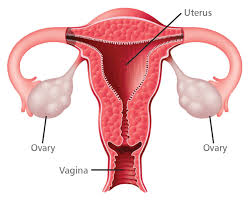
 In our body we have three main reproductive organs, a uterus, two fallopian tubes attached to it and the two main sex organs lying on either side of the uterus and the ovaries. The uterus is a hollow organ with a cavity which holds the baby as it develops. It is the lining of the uterus which under goes changes during menstrual cycle.
The lower end of the uterus has a gate way, the cervix, this opens in a tube called the vagina. Sounds simple, but it is most important, as our genital tract is connected to the outside world through this tube.  The menstrual blood flows to the outside world, sperm enter the uterus through this to fertilize the egg to enable us to make a baby.  When the baby is ready, it comes into the world through this tube screaming. We also have other covers for our genital parts, these help us in protecting the genital tract from infections.


One other very important structure is a thin membrane with a small central hole for drainage.  Many others organs in our body are involved in female maturation (puberty and menstruation as already mentioned) fertility and sexual activity. These organs are called endocrine glands. There secretions work at distant organs. These are pituitary and Hypothalamus located in the brain, Thyroid gland (located in the neck) and to some extent a gland called adrenal. When a female baby is born after three or four days later they can have a small vaginal bleeding, this in fact is a period. The infant’s uterus was influenced by her mother’s hormones, when they are withdrawn after birth and the baby has a small bleed. Many young mothers get very worried about this but this is a very good sign that all the baby’s female organs are in good form.  The infant does not have another bleed until menarche.  It is received in different cultures in different ways. In some cultures it is even celebrated. For us women it often causes many problems during our life span. Generally women have 450 periods during their life time. However we have to have them for our development, fertility and pleasure (sexually). During pregnancy and after a certain age called menopause, we do not have a period.
We do not clearly understand what starts the periods, the ovary is a remarkable organ after a certain age it responds to a hormone FSH (FOLLICULER STIMULTING HORMONE) when some of it’s premature follicles start to grow. This comes from the pituitary controlled by the hypothalamus. When an egg grows it in turn secretes another hormone called oestrogen. Only one follicle continues to grow, the rest are demised. The oestrogen produced by what we call the dominant follicle creates a surge for pituitary gland to release a hormone called luteinising hormone (LH). This results in the release of the egg from the growing follicle.  This process is called ovulation. This is what grows to be a baby.


During this time the lining of the uterus is also thickened. After the egg is released, the empty shell of the follicle becomes a yellow body called corpus luteum .  This secretes a second hormone called Progesterone this helps to mature the lining of the uterus to receive the fertilized egg just in case it was fertilized. Then the progesterone level remains increased to protect the egg. If there is no egg the increased level of oestrogen suppresses the pituitary. The levels of oestrogen and progesterone drop indicating the end of menstrual cycle. Normal cycle is a reassuring sign that ovarian function is normal. The menstrual blood is usually 40 mls; it consists of broken up endomentrial lining and secretions from the vagina and cervix and is dark brown in colour.
During the menstrual cycle the broken up endomentrium releases chemicals called prostaglandins and they are responsible for period pains and cramps.

All these hormones when withdrawn cause the period and along with prostaglandins cause many symptoms which we will discuss in the next post.  

Thursday, September 8, 2016

A FEW COMMENTS ABOUT FUNGAL INFECTIONS IN WOMEN

Candidacies or commonly called thrush is a very common infection in women. It is particularly bad during pregnancy. This
happens because women have high levels of oestrogen hormone which destroys the vaginal lining cells and besides this high levels of hormone progesterone interferes with the ability of the protective cells ( neutrophils) to fight candida. This can start fairly early during pregnancy and can go on throughout her pregnancy.  She should always see her care taker, confirm the diagnosis and make sure there are no other infections. There are two common antifungal drugs (DRUGS WHICH ACT ON CANDIDA) which are very useful and can be obtained without a prescription. These do not harm the foetus, but there are some which are not so safe. (FLUCONAZOLE). These can also be obtained easily. These can cause a miscarriage. This treatment can be in the form of vaginal suppositories or vaginal cream. In the first instant treatment is given for seven days and if it reoccurs for two weeks or more the infection can be really bad. Always have a medical input in your treatment.

Postmenopausal women
The other group of women who need attention about candidacies are, post menopausal. Postmenopausal women do not suffer candidacies as they have run out of oestrogens. They only get it if they are on HRT or are diabetic. In this situation always examine the patient, if she complains of vaginal symptoms of itching, discharge, pain on intercourse, dysurea, even bleeding.
There can be many different problems. They often get another infection called anaerobic vaginosis which causes very foul smelly discharge and itching, the discharge is predominant, as opposed to thrush where itching is maddening. I have come
across two postmenopausal women who kept on using anti thrush creams, neither they nor her primary care giver bothered to look at them. They both had a Carcinoma of the vulva which is usually occurs in menopausal women.
Other groups which suffer are Diabetics and obese women. Please do not keep focussing on one problem that is Candidacies. Do some tests, are there any other infections or any other problems. Always exclude diabetes in women with
persistent thrush.

As practitioners never order treatment without proper history and examination, if as care taker we follow this rule, we will not miss the serious issues.

Wednesday, August 17, 2016

MATERNAL MORTALITY IN INDIA IN 1960

These stories are from1960 when the maternal mortality rate in 
India was very high. Almost, 600 women died out of 100 000, live births. With the introduction of modern health, it has come down, one almost never sees what I am going to describe. These procedures were historically first done in the18th or 19th century.
(Warning)These stories are not to be read by the faint of heart. This day in the monsoon season was the hardest day of my 55 years of working life. The rain was nonstop, the roads? If we can call them that were flooded, Ram Devi came to our hospital in a bullock cart after being in labour for 2 days in this rain. She was 32 years of age had had 5 babies at home without any problems.  When she arrived her baby was lying across her stomach, the head was on the right side of her belly and a hand was prolapsing from the vagina. Above all this baby was dead and the mother was dying as well. She was septic, had a very high temperature and her haemoglobin was only 6. Our assessment was that her uterus was probably intact but very thin. We could not have done a Cesarean for a dead baby lying across the belly instead of lengthwise.
She was very weak; we had no trained anesthetist I was still very junior, I called my chief resident she decided to do what we called embryotomy. This means the dismembering of a dead fetus to remove it when normal birth and even Cesarean section is not safe. After this destructive procedure the woman can have a normal birth next time. My chief resident had witnessed an embryotomy but never done one herself. It required a lot of skill. Any way one of the residents went to pathology which was about half a kilometer from the hospital to cross match blood for her. I decided to help the patient to sleep after putting the woman in a comfortable operative position we started the antibiotic, gave her pethidine and Valium cleaned all the operative field put a catheter in her bladder, unfortunately the urine was blood stained. We were not sure if the uterus may have ruptured. The cervix was fully dilated, anyhow we proceeded with dismembering the baby. First the head, then the body; trying to protect the vagina all the time. At completion the uterus felt intact, we gave her the 2 units of blood. We all were happy as if we had saved the mother. We wrapped the baby parts and disposed of them. Since then I have never seen a case where this procedure has been required. I have seen a live baby with hand prolapsed on two occasions, and saved the baby and the mother both by Cesarean section.
On this occasion our mother died three hours later probably due to septicemia.
While we were still overcoming this disaster, Sitara a nineteen year primigravida came in with obstructed labour with a dead fetus. Her pelvis was very small and she had been in labour for many days. She was also septicemic and very ill. We had to do
a destructive operation for her called Craniotomy in which we crush  the head, compress it and remove it. We gave her some blood and antibiotics but could not save her.
Within 2 hours after this second maternal death, Bimla Devi aged 22 having had her second baby came in with a retained placenta. She had delivered about ten hours prior had been bleeding, but the placenta did not deliver naturally. Unfortunately
She was dead on arrival.
I was totally broken, three maternal deaths in one night.
The World Health Organisation has introduced a program called The Millennium Development Goals trying to improve maternal health and mortality rates around the world.

This includes nutrition, infectious diseases and they hope that things will improve by 2030. The most affected countries which need help are, India, Pakistan, Papua New Guinea and some African countries. 

Wednesday, August 3, 2016

TURNERS SYNDROME

Turner’s syndrome is a condition in which a human female is missing one of her chromosomes. As I have already discussed
Humans have 46 chromosomes. They appear in pairs of 22 which are anatomical chromosomes, and 2 are the sex chromosomes, XX in female, XY in male.  If a female child is born with only one X chromosome it does not develop in to a normal female. The general characteristics of these are very variable depending on as to how many cells are missing one x chromosome. This is called  Mosaicism
Even in utero this foetus does not develop normally its tissues swell and it develops thickening round the neck called cystic hygroma, lower than normal weight, swelling of hands and toes. This diagnosis can be made from the blood test from the foetus and pregnancy can be terminated. It is not an inherited condition, it happens during the process of reproduction. At birth a baby born with turners’ syndrome shows broad neck, small weight, hands that turn out, a high narrow palate and swollen hands and feet.

It may even look like a normal female baby depending on how many cells within the body are abnormal, this is called mosaicism.  A lot of turner syndrome pregnancies are lost as miscarriages, some are terminated and some are born normally.  They can appear normal up to 3 years of age, then their growth spurts stop, they have learning difficulties and puberty does not happen. Periods do not happen. The growth problem can be helped by female hormones. In present day with the help of IVF they can even have a baby. In my time I have terminated two pregnancies, looked after a woman who had a baby with the help of IVF. I must tell you this last story Tina had 7 miscarriages under my care, other experts and I could not help her when she was having her 8 pregnancy she was 41 years of age. Investigations into the wellbeing of the foetus showed it had turner syndrome but otherwise the baby appeared normal.She decided to have this baby. The baby was born in good condition and grew nicely up to 10 years of age unfortunately I lost contact with them. I hope she is growing up nicely and normally.